How Claremedica Made Cognitive Decline Visible Before It Became a Crisis
- ORGANIZATION
- Claremedica
- PATIENT POPULATION
- Seniors
- CARE MODEL
- Value-Based, Full-Risk Medicare Advantage
- LOCATION
- Florida
- CLINICAL SITES
- >35
- CREYOS CUSTOMER SINCE
- 2025
of organization-wide cognitive screening with traditional tools. Cognitive decline was affecting care everywhere, and they knew their approach wasn't capturing it.
clinical adoption of Creyos on day one, the highest across 10 go-lives in their disease detection program. Clinicians continue to champion the rollout.
of patients identified in the early and mild stages of cognitive impairment, early enough for proactive care planning and meaningful family preparation.
"Creyos hasn't just changed things for our patients and their caregivers.
It has changed the way our primary care providers think about what is possible when it comes to managing cognitive decline, and that is how you achieve better outcomes."
High-touch primary care built around early detection
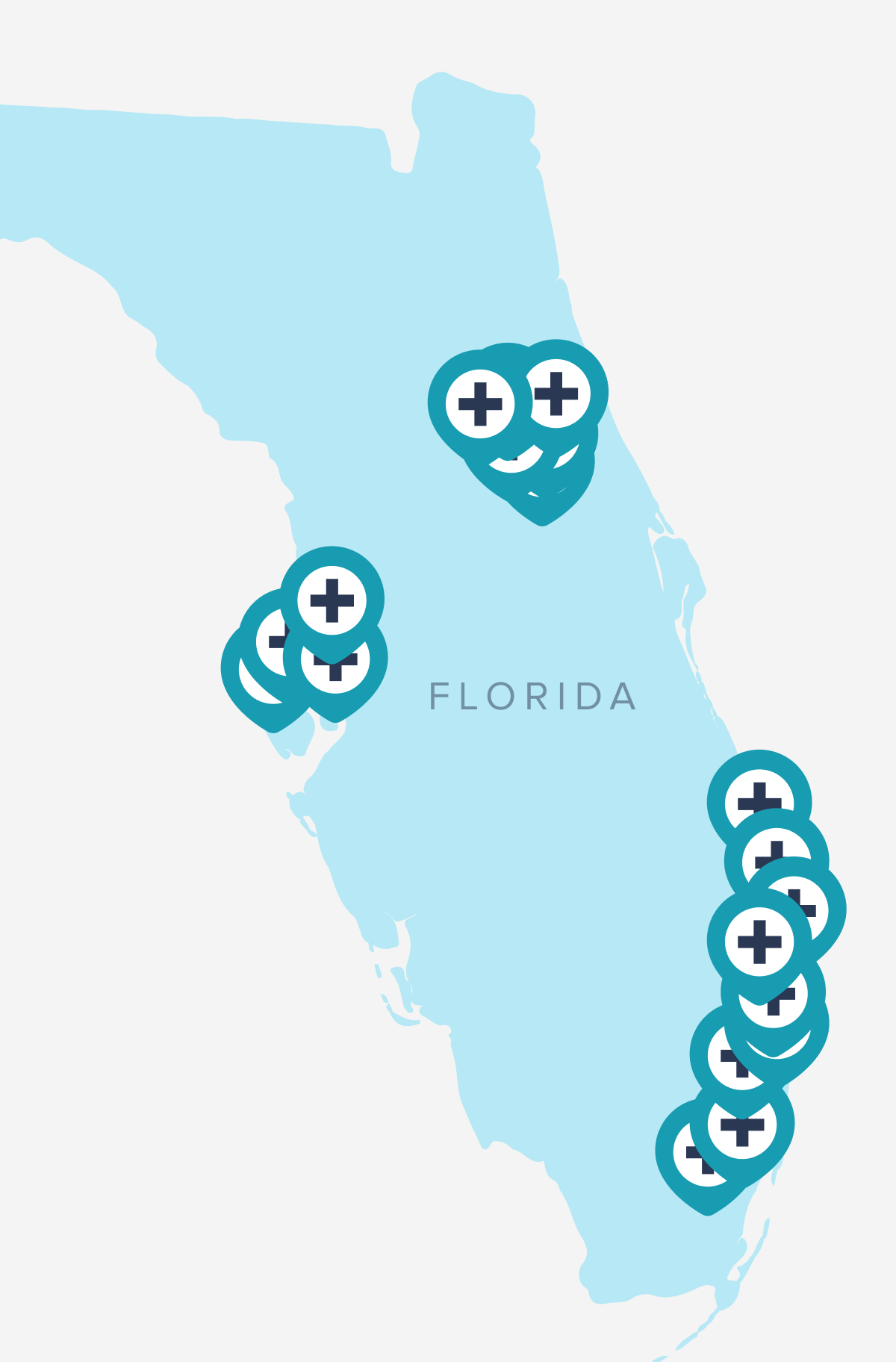
Claremedica is a value-based primary care organization serving a culturally and linguistically diverse senior population across more than 35 sites in Florida. The high-touch care model means patients are seen 7 to 10 times annually, often by the same care team for years.
Their care model is built for prevention, not just response, and that logic shapes how they frame their main competitors. As Benjamin Todd, SVP of Strategy and Analytics, puts it, they see those competitors as systemic forces: a stale U.S. health care system, a chronic disease epidemic, and barriers to access.
Cognitive decline touched all 3 forces: a chronic condition slipping through an outdated screening approach, imperceptibly creating barriers for patients who were forgetting medications, missing appointments, and ending up in the hospital, without a system that equipped clinicians to connect these outcomes back to cognition.
Screening for cognitive decline and still missing it
Claremedica had been screening for cognitive impairment organization-wide for more than 2 years using the Mini-Mental State Examination (MMSE), a CMS-recognized paper-based assessment. But both clinicians and clinical leadership could see the test had limitations that were becoming difficult to overlook.
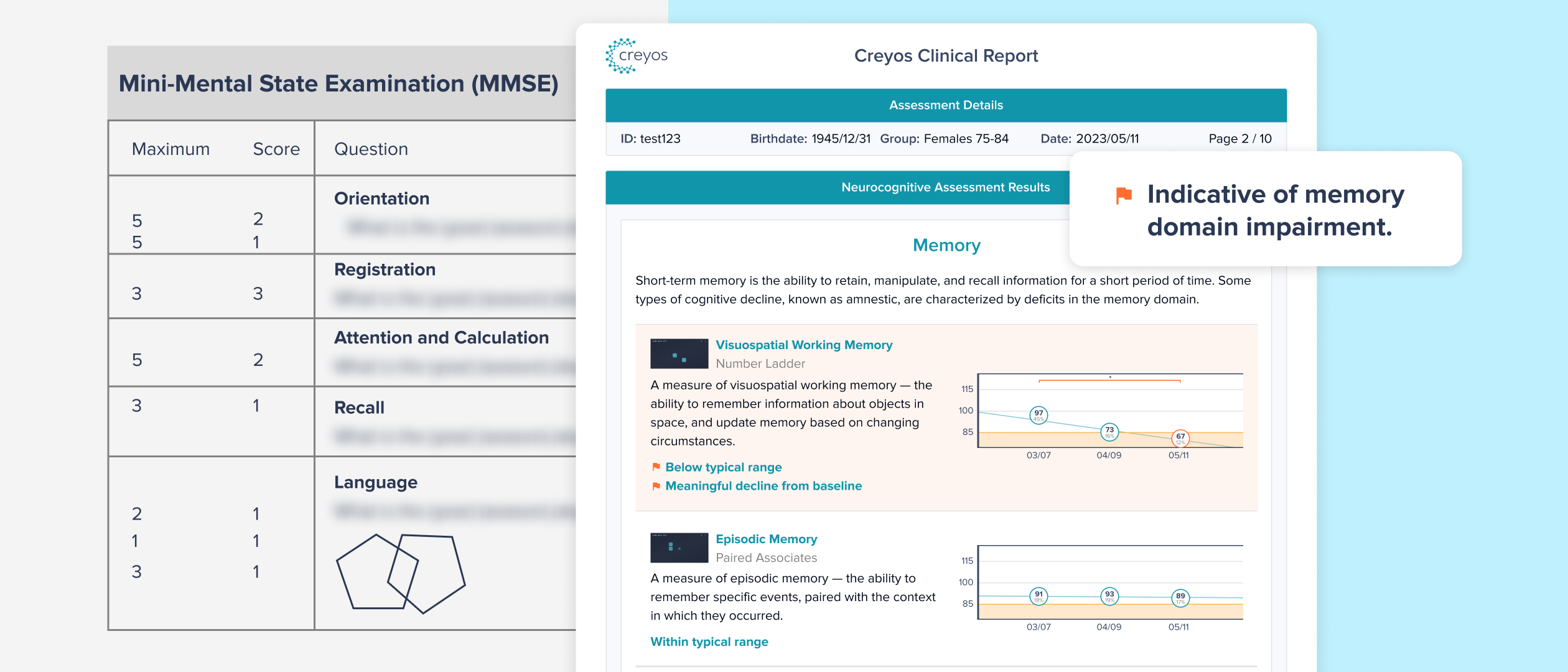
For Claremedica's Chief Medical Officer, Dr. Nehal Gheewala, the core issue was what clinicians could actually do with the result: "Equipping a clinician with a single score doesn't help them have a meaningful conversation with a patient or their family, or know what to do next."
Meanwhile, the clinical signals were mounting. Root cause analysis of hospital admissions kept pointing back to cognition. Patients were struggling with medication adherence, missing appointments, and not communicating symptoms accurately to their care team. Roughly 60% of cases of cognitive impairment go unidentified in primary care nationally, mirroring what Claremedica was already seeing in practice. For an organization built around early detection, this was a gap the clinical leadership team could not accept. "We weren't going to accept being average at best," says Dr. Gheewala.
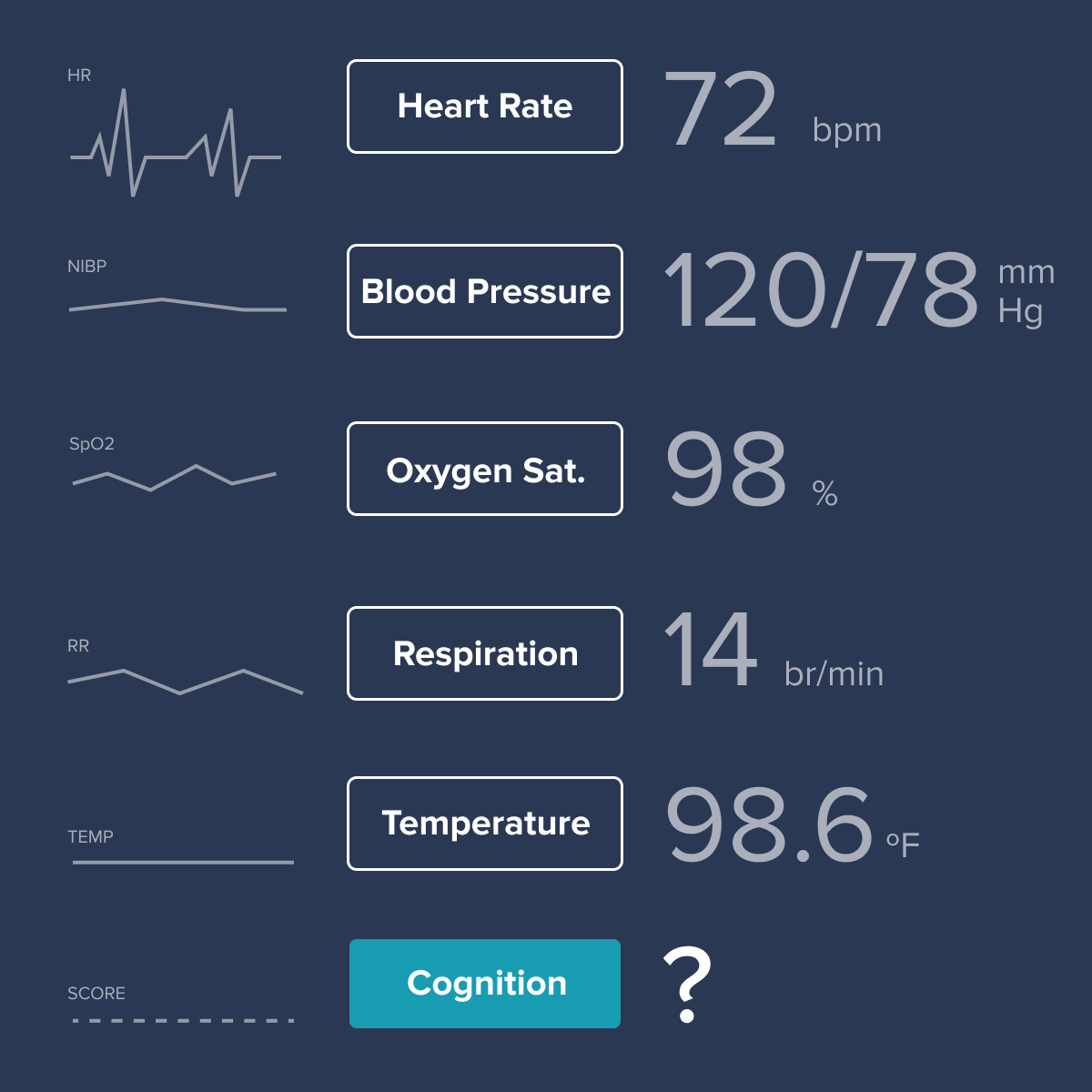
“In medicine, we're trained to look at vital signs: temperature, blood pressure, heart rate. But not cognition, which changes just as subtly over time. What would happen if we could?”
A tool that had to earn its place
Claremedica did not just need a better screening tool, but a cognitive assessment platform that could meet 4 non-negotiable criteria:
- clinical validity, above all else;
- operational scalability across all sites;
- compatibility with a culturally and linguistically diverse patient population; and
- direct integration into existing data and analytics infrastructure.
"Adoption of a clinical tool cannot be mandated. These are clinicians, free thinkers, board-certified physicians. A tool has to earn its place."
"If you're not able to measure it, you're not able to improve it. You're not even able to define success," Benjamin says. With those criteria set, Benjamin led the evaluation across multiple digital assessment tools on the market, not against the MMSE or MoCA, but against other digital platforms.
Benjamin's assessment was clear: "Creyos absolutely, hands down, blew everything else out of the water." In practice, the platform addressed each of Claremedica's priorities. The 30+ years of peer-reviewed research behind it gave Dr. Gheewala confidence the evidence would hold up to scrutiny from physicians he describes as "sophisticated consumers of clinical evidence."
Administered by medical assistants on an iPad in roughly 6 minutes, it fit into the care model without adding burden. With features like shape-based cognitive tasks and support for multiple languages, it worked consistently across the diverse population Claremedica serves, including patients for whom traditional screening tools had created cultural and language barriers.
"Creyos not only allowed us to work smarter, do more for our patients, but actually gave time back to our clinicians," Benjamin says. "When you have something like that, it's an easy sell."
Adoption across 35+ sites without resistance
Before rollout, Claremedica invested in organizational alignment. They brought in Prof. Adrian Owen, PhD, Neuroscientist and Chief Scientific Officer at Creyos, to present to every staff member across the organization on the opportunity ahead.
"We shut down operations across the entire organization to tune in for an hour," Dr. Gheewala shares. "We have never had a leader come in and convey the clinical outcomes improvement that we were about to walk into. A year into this, we're happy to say they were right." The result was buy-in at every level, from primary care physicians to front desk staff to coding and analytics teams.
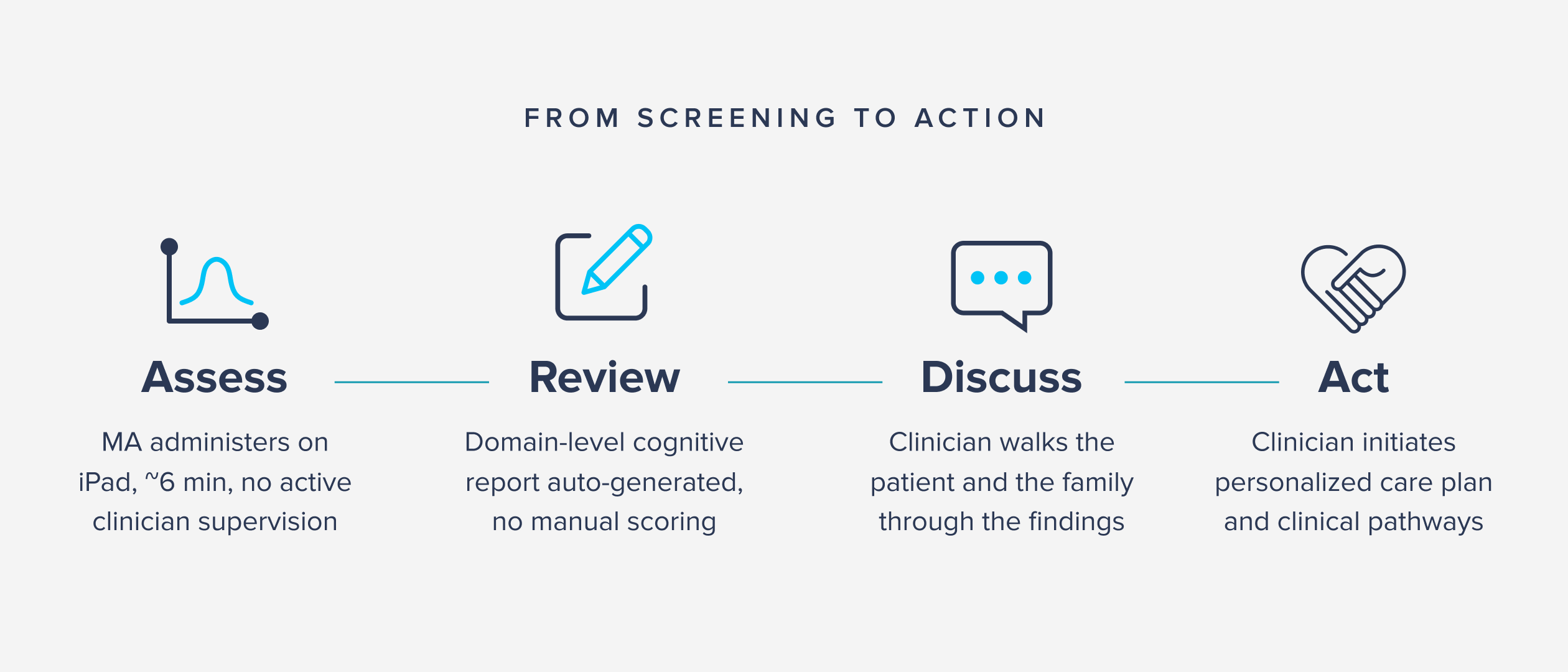
As implementation progressed, Claremedica built clinical pathways that connected Creyos results to concrete actions, including:
- medication review;
- chronic disease management;
- depression and mood screening; and
- social engagement.
Each Creyos assessment generated a report clinicians could open and review with the patient still in the room, and wide-spread adoption quickly followed. Clinicians "admitted that they had never seen anything like this that was so easy to implement and also easy to discuss with the patient," Dr. Gheewala shares.
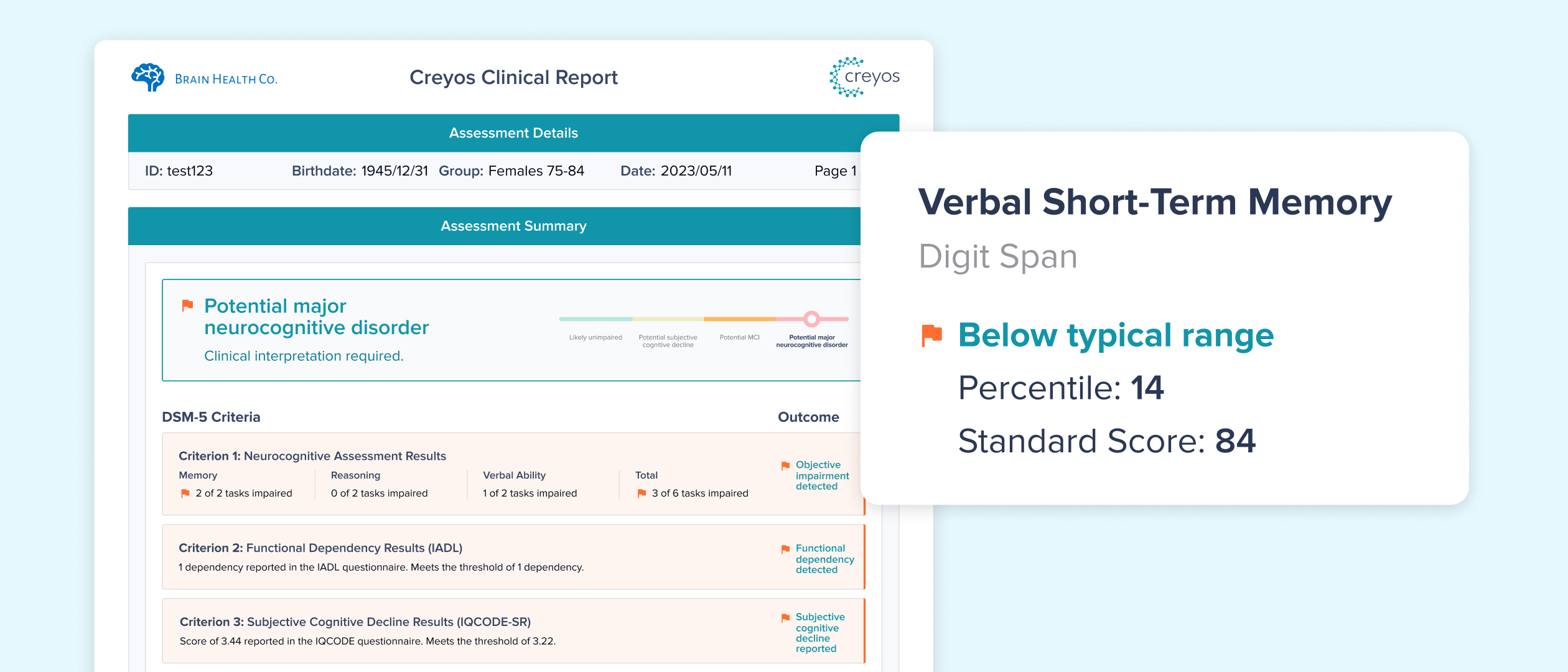
Change is rarely smooth in established clinical workflows, especially among clinicians trained to be cautious about new tools. Dr. Gheewala describes Creyos as an outlier from day one, with clinicians continuing to express enthusiasm about the tool, the implementation, and the patient conversations it enables. As Benjamin puts it, "Adoption was so immediate that on even the busiest days, the only bottleneck was iPad battery life."
"We've done 10 different go-lives across our disease detection program. The only one that has ever hit over 95% on day one was Creyos. I had to call the analytics team and say, 'Walk me through everything, because I don't believe it.'"
Detecting cognitive decline early enough to act
Within the first 7 months, Claremedica completed more than 34,000 Creyos assessments across the patient population, including repeat assessments to track how individual patients were trending over time. The findings went beyond what traditional screening had been able to surface. "We have more than double the prevalence of dementia than the previous tool identified," Dr. Gheewala says.
Over 90% of newly identified patients were in the early or mild stages, the window where proactive care planning is possible. As Dr. Gheewala explains, “The early stage is very subtle, easy to miss. That's what Creyos excels in.” Over 80% of those patients had been with Claremedica for years and had already been assessed using traditional tools. They found the tools were well-suited to detecting moderate and severe impairment, but tended to miss early-stage cases.
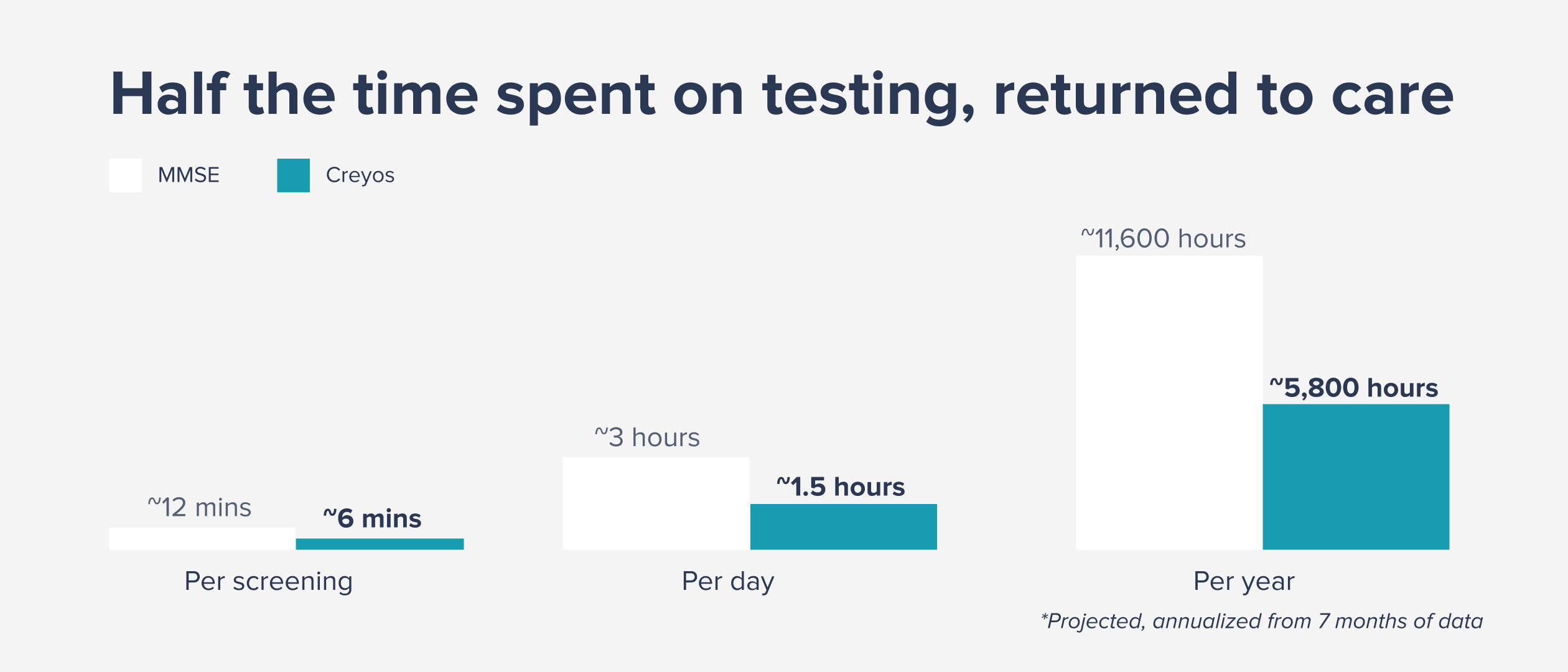
The operational impact was equally significant. Average screening time dropped from roughly 12 minutes with the MMSE to 6 minutes with Creyos. That baseline reflected Claremedica's commitment to administering the MMSE by the book, with some PCPs taking 15 to 20 minutes themselves to ensure thoroughness.
Across a typical clinician caseload of 15 to 16 patients per day, that translates to roughly 90 minutes returned to each clinician daily. In a value-based care model, that time goes directly back to patient-facing care: discussing results, coordinating next steps, and having the kinds of conversations that build trust between a clinician and the patients and families in the practice.
What made the difference was not just detection, but the quality of the clinical information. Each Creyos assessment captures domain-level data that Claremedica's providers can trend across visits. This objective, deeper insight, Dr. Gheewala says, is what enables clinicians to show families what is happening and what to do next.
That specificity has shifted how Claremedica clinicians approach cognitive health. Their front-line physicians now treat cognition the way any other vital measure would be trended. Several clinicians have begun requesting additional assessments on their own, based on what is being observed clinically. "People are still beaming every time they talk about it," Benjamin says.
What early detection makes possible
For Claremedica, identifying cognitive decline at the earliest stages has opened the door to acting on it, not just documenting it. Families are no longer caught off guard by a late-stage diagnosis. As Benjamin describes it, families now have time to prepare, to ask questions, and to plan alongside the provider.
Claremedica is now tracking how early identification correlates with downstream outcomes, including falls, avoidable hospitalizations, and overall cost of care, with the goal of measuring long-term impact over the next 12 to 24 months. For Benjamin, the significance goes beyond cognitive health: "It gave us the blueprint for every other initiative moving forward."
“No one is saying, 'I wish I didn't know that.' They're saying, 'I'm so glad I was able to catch it in that intervention window.'”
What Claremedica learned from the rollout of Creyos
Were Dr. Gheewala and Benjamin to advise other organizations considering cognitive screening, their guidance would distill into two practical pieces. The first is operational readiness — screening only generates value when paired with a clinical pathway that turns a positive result into action. "If you screen without a pathway, you're just doing more paperwork," Dr. Gheewala says. "And worse than paperwork, you're creating a clinical obligation you're not prepared to meet."
The second is investment in the team that surrounds the tool. "Buying is great, but how you implement something is the secret sauce," Dr. Gheewala says. He credits the medical assistants, care coordinators, and social support teams who built the workflows around Creyos as central to the rollout's success.
But the deeper lesson sits underneath those two. For Benjamin, the success of the rollout required treating cognitive screening as part of something larger, rather than a standalone assessment.
"If you're treating cognitive screening as a standalone initiative, you get standalone results. When you're building this into the ethos of the organization, you get something greater."
That ethos is what Claremedica calls Care You Can Feel. As Benjamin describes it, it means "a senior walking into a Claremedica center, doing a cognitive assessment that her clinician actually uses, having a conversation with her care team about what it means, and going home knowing that the people taking care of her are paying attention to all of her, not just her diabetes and her blood pressure, but her memory, her mood, her social life, her independence."
That, in his words, is the Claremedica model. Creyos is one of the ways they make it real.