How Pure Recovery California Pairs Brain Mapping With Functional Testing

- ORGANIZATION
- Pure Recovery California
- PATIENT POPULATION
- Professional and amateur athletes
- CARE MODEL
- Residential, partial hospitalization, and outpatient psychiatry
- LOCATION
- Oxnard, California
- PROGRAMS USING CREYOS
- 3
- CREYOS CUSTOMER SINCE
- 2026
for the practice's previous cognitive test, a fixed-length battery that patients with cognitive symptoms often abandoned partway through.
of patients in the sports neurocognitive program are assessed at intake and again at discharge, on a customized 15- to 20-minute Creyos battery.
from baseline to retest, with functional improvement the team could quantify across short-term memory, attention, and impulse control.
"In 25 years, I can't tell you how many patients have told me they feel like a guinea pig. One medication, then another, with nothing to show them what is changing. Now we can show them how their cognition has changed and talk it through with them. They can see something tangible that they haven't seen before."
A center built for athletes
Pure Recovery California treats professional and amateur athletes as well as general outpatient psychiatric patients. Many are living with the effects of head injury alongside the depression, anxiety, chronic pain, and substance use that often accompany it. The center is in Oxnard, an hour up the coast from Los Angeles, and is the first Joint Commission-accredited, neuroscience-driven treatment center in the country.
It was founded in 2015 on the premise that the head trauma former NFL players carry belongs in the same treatment plan as the psychiatric and substance use symptoms they present with. Many arrive having sustained four or five serious concussions.

“These players are going through so much, physically and emotionally. And 10 or 12 years ago, they weren't getting the help they needed.”
The center has spent years testing that premise directly. In 2018 it was selected for a University of Pittsburgh Medical Center study, funded by the Chuck Noll Foundation, that imaged athletes' brains before and after treatment to determine whether symptom improvement corresponded to structural change.
The center offers residential treatment, typically for around 30 days, and partial hospitalization, where patients attend programming during the day. The sports neurocognitive program, which began seeing patients in May 2026, works with athletes referred specifically for neurocognitive disability. An outpatient psychiatry clinic, opened in January 2026, extends the same assessment approach to adults in the surrounding community.
A physiological picture that needed a functional counterpart
The neuro department's work is built on measurement. The team records and visualizes every patient's brain activity with EEG, then selects among neurofeedback, neuromodulation, and other therapies aimed at changing how the brain functions. Because those therapies target specific regions, the areas where a patient's brain activity departs from expected patterns determine what gets treated.
The brain map describes physiology, showing where activity diverges from what is typical for a patient's age. Austin Lutz, who oversees assessment administration in the neuro department, walks each patient through the results.
“I'll show them their brain activity at a physical level, which is very validating for most people.”
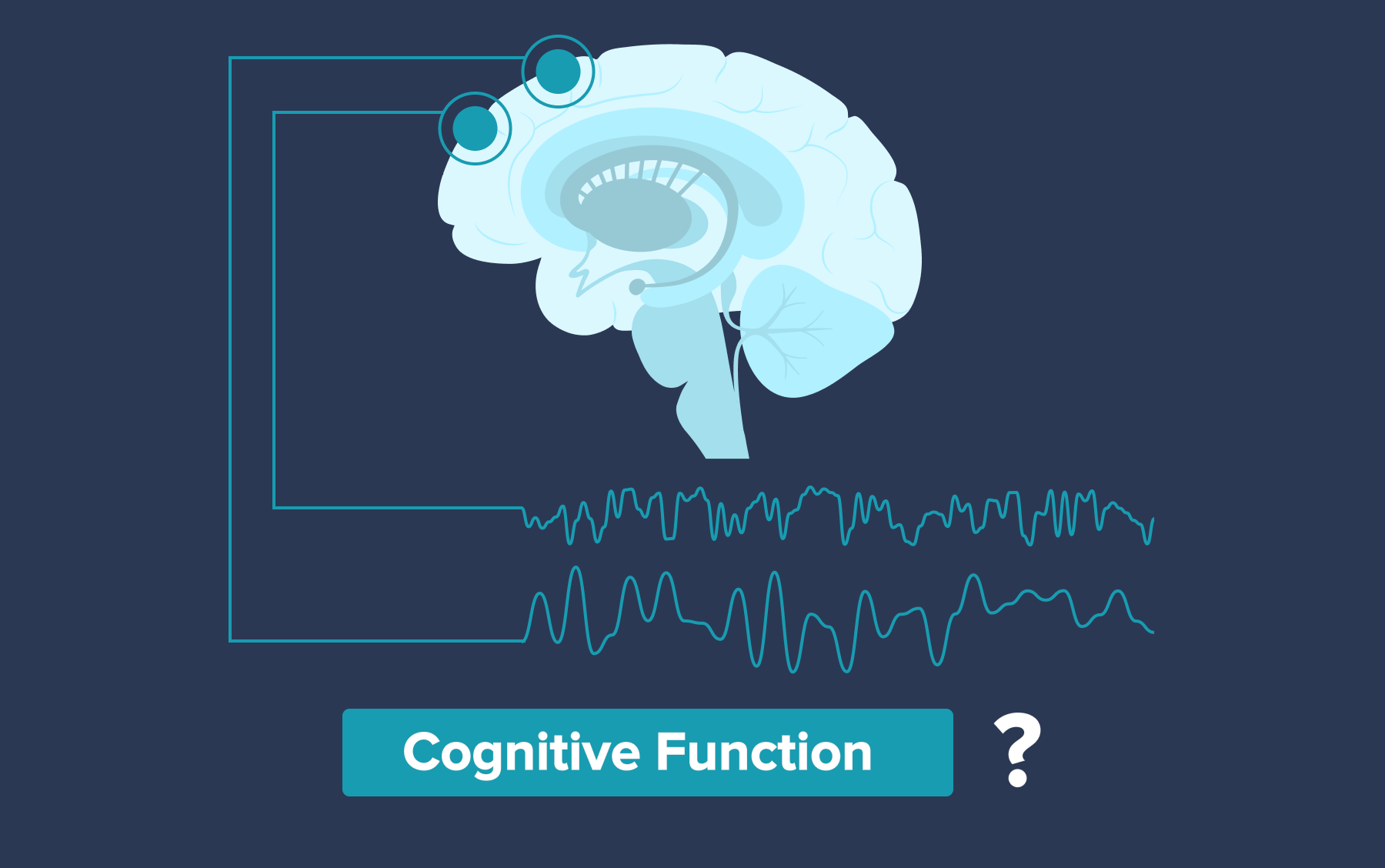
However, answering whether a difference in electrical activity corresponds to a measurable deficit in memory or attention requires a second instrument. The cognitive test the practice had been previously using ran close to an hour at a fixed length.
“Previously, we were using a 45 to 50 minute test, where you couldn't add or subtract any tasks to adjust the length, and people were just getting frustrated. They wouldn't finish it, so the data was irrelevant.”
An assessment the team could customize to fit the patient
Dr. Reyes arrived at Pure Recovery in 2025 to open the outpatient psychiatry clinic, bringing a tool she had already chosen. She had used Creyos at a previous outpatient practice with five locations and built it into the clinic's plan from the outset.
“The second I walked through the door at Pure I said, 'If we're doing outpatient, we're doing Creyos.'”
Creyos was in use from the clinic's first day, and leadership extended it quickly. Seeing the results, Pure Recovery's CEO asked the neuro department to administer Creyos to residential patients as well, which began in January 2026. When the sports neurocognitive program launched in May 2026, Creyos was written into its protocol.
Austin valued one capability in particular: the ability to select tasks individually.
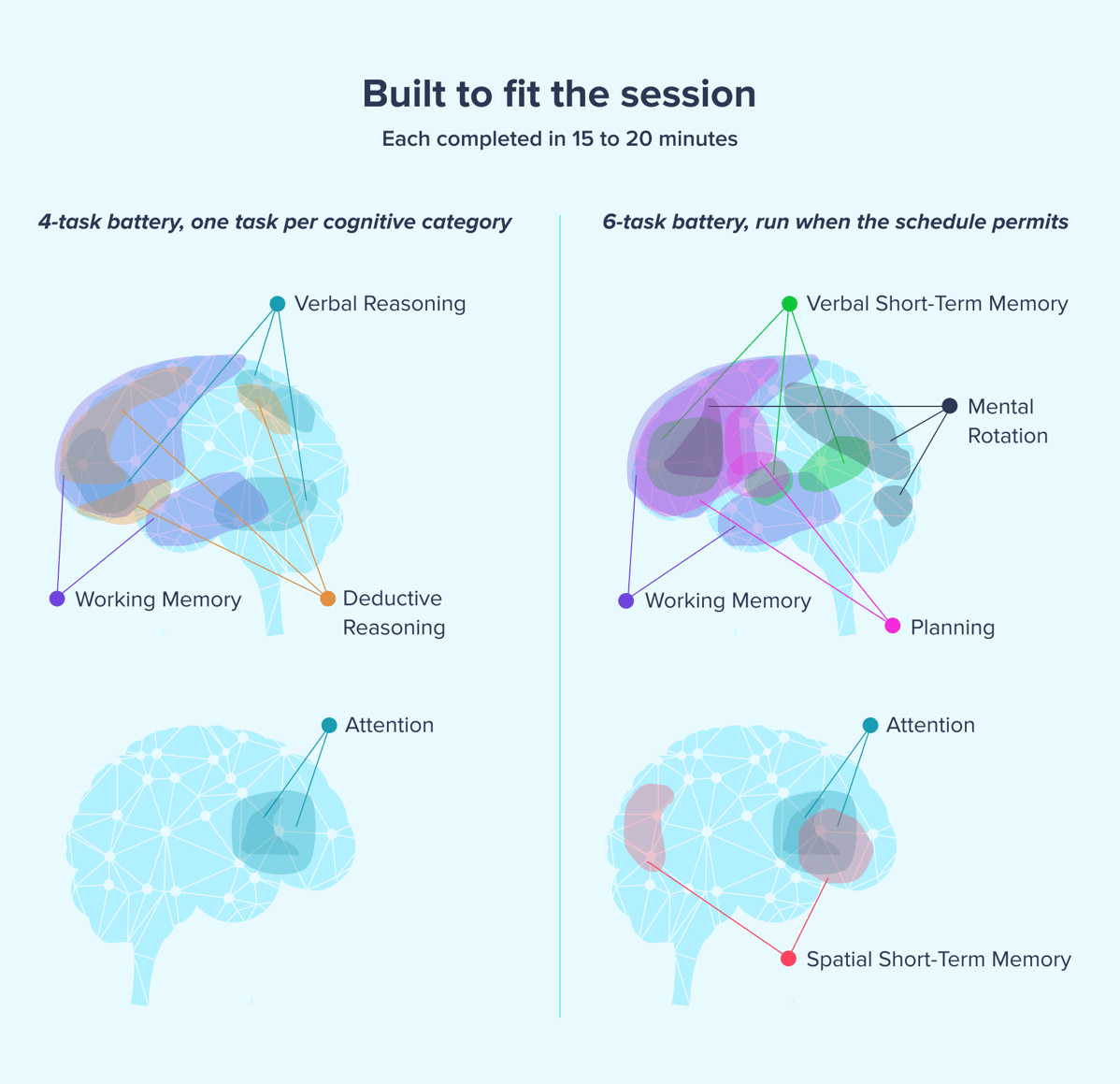
“I can say, okay, I just want this battery of tests, whether that's 4 tests or 6 tests. It can be a short amount of time that fits into the program.”
Austin draws one task from each cognitive domain for the four-task version, adding two more when the schedule permits.
Domain-level reporting gave him the second capability he needed, since each result corresponds to a specific cognitive function instead of a single overall score. That lets him set a cognitive finding directly against what the brain map already showed.
“I like that I can say, look, this was a memory test, and this is how you did. And then here are your quantitative EEG results, and this activity in this area is what correlates with it.”

A treatment program that measures at every stage
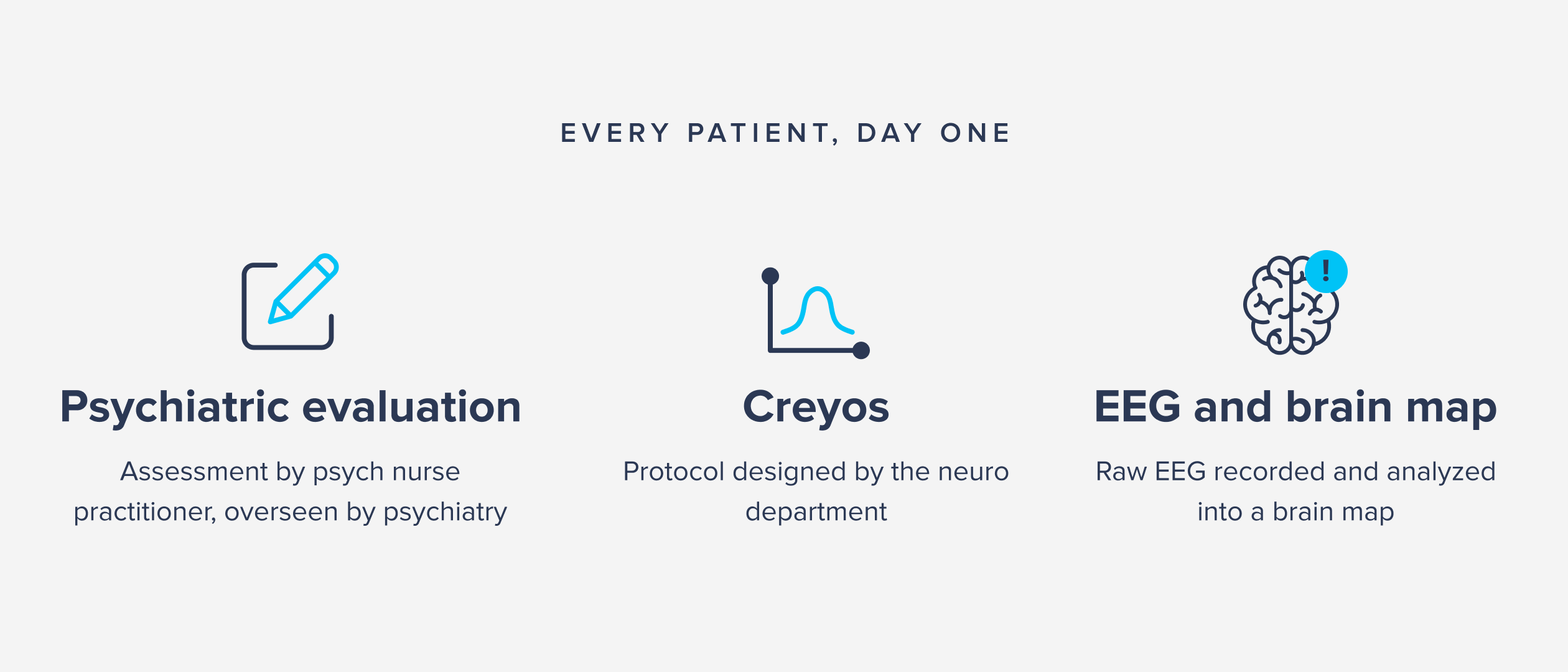
Assessment in the sports neurocognitive program is front-loaded and standardized. Each patient begins with a psychiatric evaluation, followed by Creyos, then the EEG recording and brain map. The Creyos protocol is administered on day one and again at the end of the patient's program, whether that comes after eight weeks of weekly visits or five consecutive days for someone traveling in.
“Our protocol lets us show a patient exactly what we're seeing. We can say, your temporal lobes are a little asymmetrical, maybe there's slower focus on one side, and I can see that that would probably be an issue. But let's illustrate that through some sort of cognitive testing.”
The brain map and the cognitive results are then interpreted together. The brain map locates where activity diverges from age-based norms, and the cognitive results identify which functions are affected. From there, the team directs neurofeedback, neuromodulation, and magnetic stimulation to the regions involved.
Appointments in the sports neurocognitive program run four to six hours, long enough for Austin to complete the full intake sequence in a patient's first appointment. Residential patients are seen twice a week in shorter sessions, so he administers Creyos during their first or second visit and again before discharge.
Measurable change on two independent instruments
Retesting at the end of a course of treatment gives the neuro department a direct comparison against the day-one baseline. The team reports that patients who arrive with significant impairment following repeated head trauma have shown measurable improvement at discharge in multiple cognitive domains, including short-term memory, attention, and impulse control. Gains in self-regulation and reductions in anxiety are common as well.
The cognitive results and the brain's electrical activity patterns tend to move together. The team expects reduced slow-wave activity in a region governing attention, for example, to show up as improvement in attention scores.
“It's not always one to one, how much improvement on the EEG is going to be reflected on the cognitive testing. But they almost always are going to go together.”
Two independent measures pointing in the same direction give the team more confidence in a finding than either would alone.
Evidence the patient and the care team interpret together
Cognitive results give the treatment team something to put in front of a patient and talk through, including findings the patient did not report.
That evidence also shapes what the practice does. A patient presenting with attention complaints completes cognitive testing before any prescribing decision, so a stimulant is started on evidence of a functional deficit rather than on report alone. A patient whose results come back clear continues to be evaluated rather than started on medication.
“Just like patients can see their improvement physically at the end with the post-EEG, they can also see their improvement in the testing. They're seeing multiple objective measurements.”
Cognitive data has also changed how the practice works with clinicians outside it. Referrals out of psychiatry for input on brain function have historically been uncommon, and Dr. Reyes credits a shared objective measure with changing that.
“It facilitates communication between psychiatrists and other groups of doctors that we wouldn't always be connecting with, whether that's a neurologist or a psychologist for full psychological testing.”
But the benefit Dr. Reyes returns to is what happens when a patient sees their cognition measured.
"Building rapport with patients, and that trust in working with each other, is almost more important than the treatment itself," she says, "and seeing their own results helps that process so much."