
.png)
The ADHD and MCI protocols are the pre-built, condition-focused Creyos protocols for attention-deficit/hyperactivity disorder (ADHD) and mild cognitive impairment (MCI). Creyos has enhanced them with two key updates: automated session notes that reduce documentation workload and refined report titles designed to facilitate more productive, patient-centered discussions.
When clinicians are focused on delivering high-quality care, it leaves little time to spare for administrative tasks that pull them away from patients. Yet, documentation is essential, and conversations about cognitive health require clarity and compassion. These two updates are designed to support clinicians balancing these demands.
Article Highlights
Creyos has enhanced the ADHD and MCI protocols with automated session notes and refined report titles.
- Session notes, previously available only for custom protocols in Creyos, are now automatically generated for every session using the ADHD and MCI-focused protocols.
- Each note includes details on the patient, clinician, assessment, and results, and is ready to copy into electronic health records (EHRs).
- Condition labels like “ADHD” or “MCI” have been removed from report titles, which now show a more neutral title, “Creyos Clinical Report.”
- The condition focus is still documented in the provider portal and included in the automatically generated session notes.
Automated session notes that support better care
What are session notes?
Session notes play a vital role in cognitive care. They ensure accurate documentation of each assessment, support continuity across care teams, and provide the evidence needed for referrals, billing, and audits. When done well, they enhance both clinical quality and operational efficiency; however, they often take valuable time away from patient care.
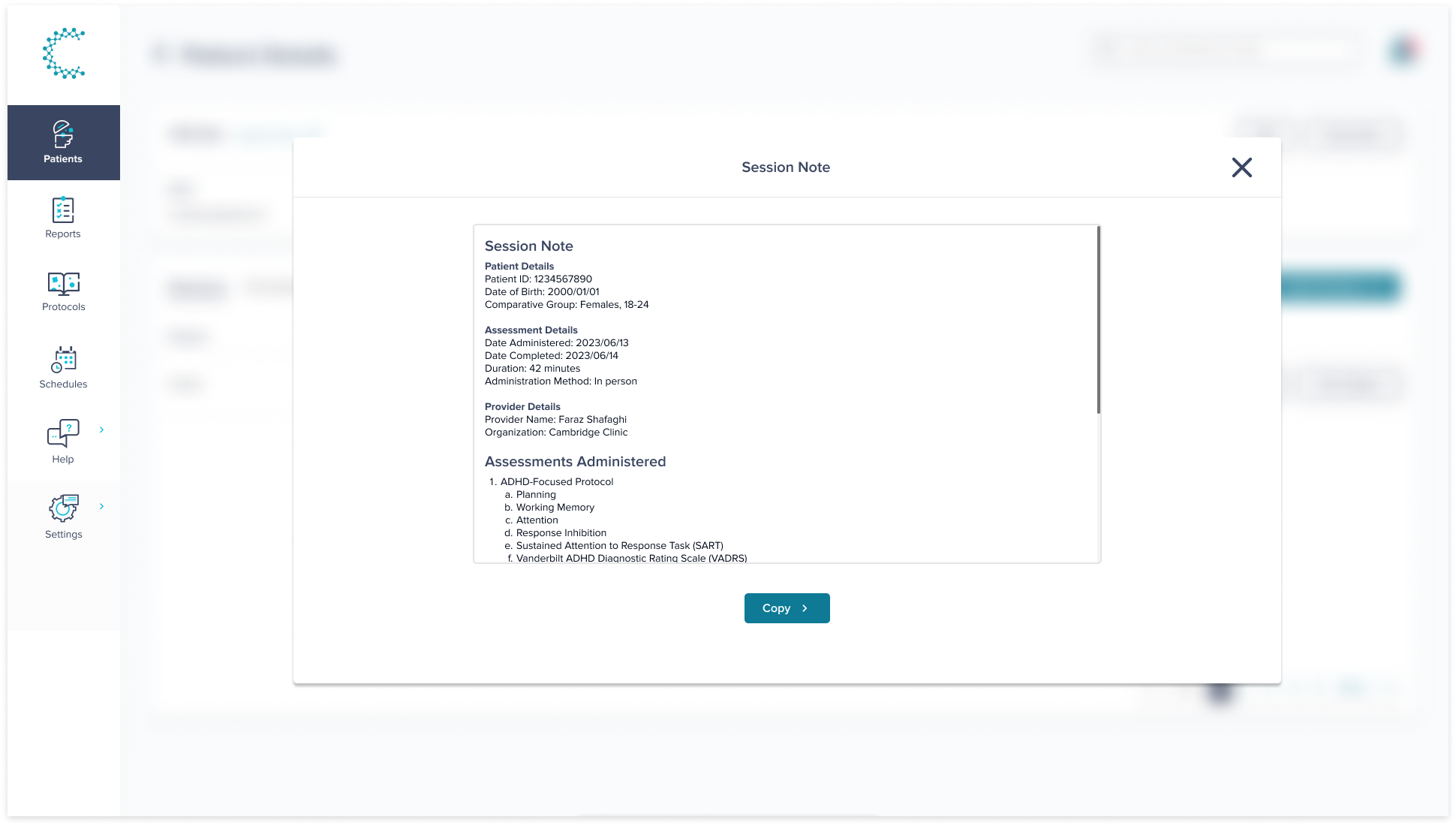
In Creyos, session notes are automatically generated with each cognitive assessment session. They include key details like patient information, clinician names, tasks administered, and assessment results. Designed to save time and improve consistency, session notes help ensure that no critical information is missed.
Until now, session notes were only available for custom protocols in Creyos, requiring clinicians using the pre-built ADHD and MCI protocols to manually document these sessions.
How have session notes been updated in the ADHD and MCI protocols?
Session notes are now available for the ADHD and MCI-focused protocols, bringing the same time-saving, high-quality documentation to the protocols most commonly used for detecting and monitoring cognitive impairments related to these conditions. Every session using these protocols is captured automatically, helping clinicians stay focused on care rather than charting.
Enabling clinicians to skip the manual write-up, session notes:
- Save time: Session notes are automatically generated and ready to copy into EHRs or to include as part of a referral or claim, so you can spend less time documenting and more time with patients.
- Improve documentation quality: Each note includes in-depth, structured session information, including details on the patient, clinician, assessment, and results. Automatically generated notes help ensure accuracy and completeness, reducing the risk of errors and improving overall documentation quality.
- Enhance continuity of care: Automatically generated notes provide key testing session information in a consistent, shareable format. This makes it easier to keep care teams aligned, streamline referrals, and ensure all care team members have the information they need to deliver timely, informed care.
How it works: real-time notes with every assessment
Whenever an assessment is administered, a session note is automatically generated in the patient’s profile within the HIPAA-compliant Creyos platform. As the patient moves through testing, the assessments are completed and scores are added in real time.
What’s included in session notes?
Session notes include key details on the patient, clinician, and the assessment. These are helpful for creating the documentation required for billing testing services, referrals, and audits.
This information includes:
| Patient details |
|
|---|---|
| Provider details |
|
| Assessment details |
|
How to access session notes
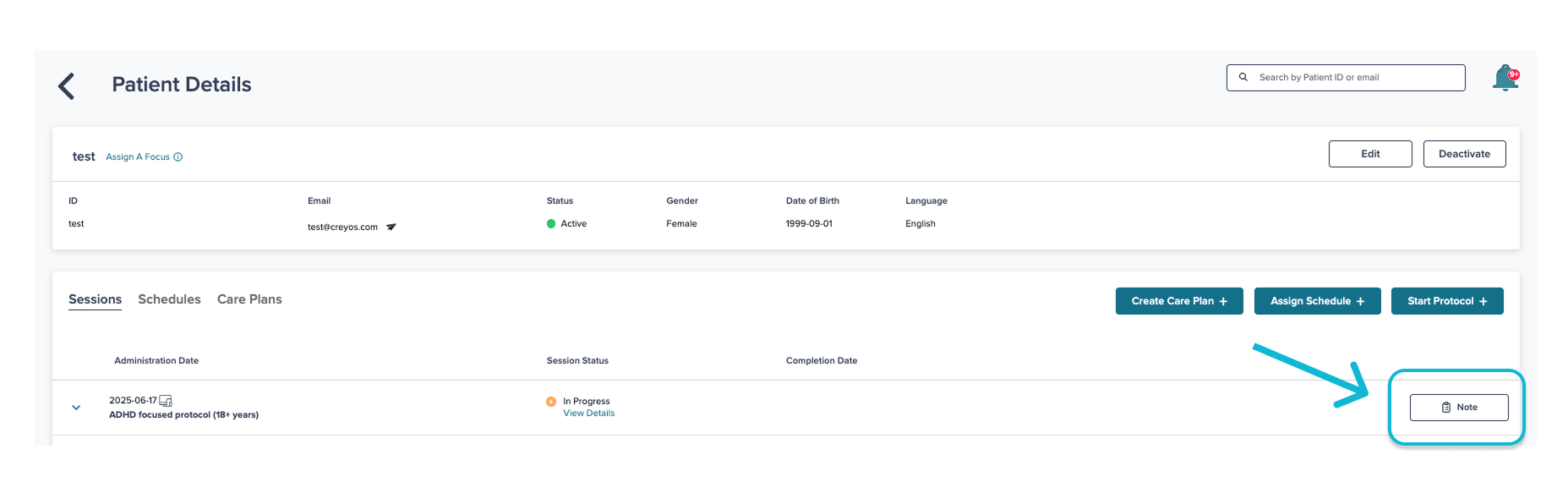
Session notes are available on the Patient Details page. The full note or just the required details can be copied to any other secure spot for documentation of testing.
Updated ADHD and MCI report titles for better patient communication
To further support impactful, patient-centered care, Creyos has also simplified the condition-focused protocol report titles and fine-tuned how the results are framed for patient communication.
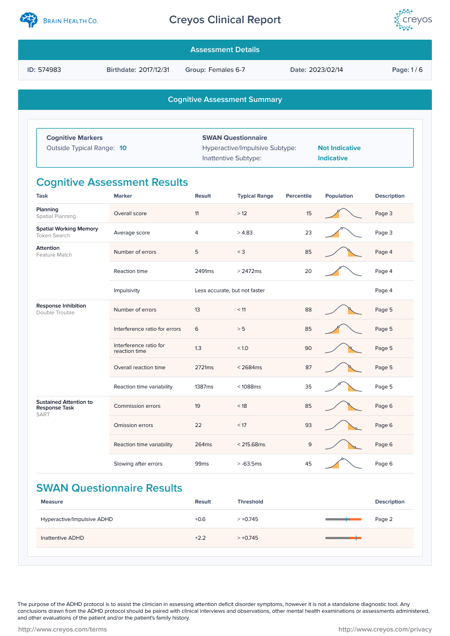
Condition labels like “ADHD” or “MCI” previously appeared at the top of reports, which could lead to confusion or concern before context was provided. These labels have now been removed from report titles, making it easier for clinicians to guide thoughtful conversations focused on results, insights, and next steps.
Refreshed titles: how removing labels helps with patient communication
All of the same high-quality, validated data remains, but this small change can make a big impact on delivering compassionate care to:
- Keep the conversation focused on what matters: By keeping the cognitive results front and center, clinicians can have more meaningful, patient-friendly conversations, explaining findings, what they could mean, and what to do next. Focusing on results prevents patients from getting distracted or worried by the condition in the report title.
- Enhance flexibility in patient conversations: Clinicians gain more control over how and when a possible diagnosis is introduced, allowing them to tailor their approach to each unique patient’s needs.
- Reduce patient anxiety: Removing the condition label avoids premature labeling or misinterpretation of the report and supports more productive clinical conversations.
What to expect: updated ADHD and MCI report titles
ADHD and MCI-focused reports will now show a more neutral title, “Creyos Clinical Report,” making them easier to share and discuss with patients. The condition focus is still clearly documented in the provider portal and included in the automatically generated session notes.
This means the reports will continue to complement other documentation in the patient’s chart or visit note, helping to support referrals, billing, and audits as needed.
Enhanced documentation and reporting that help you deliver high-quality care
Caring for patients with cognitive concerns means balancing clinical precision with clear, compassionate communication, often while juggling limited time and increasing demands.
These updates to the ADHD and MCI-focused protocols are designed to lighten that load, helping you quickly capture session details and guide meaningful conversations with patients and their families.
