
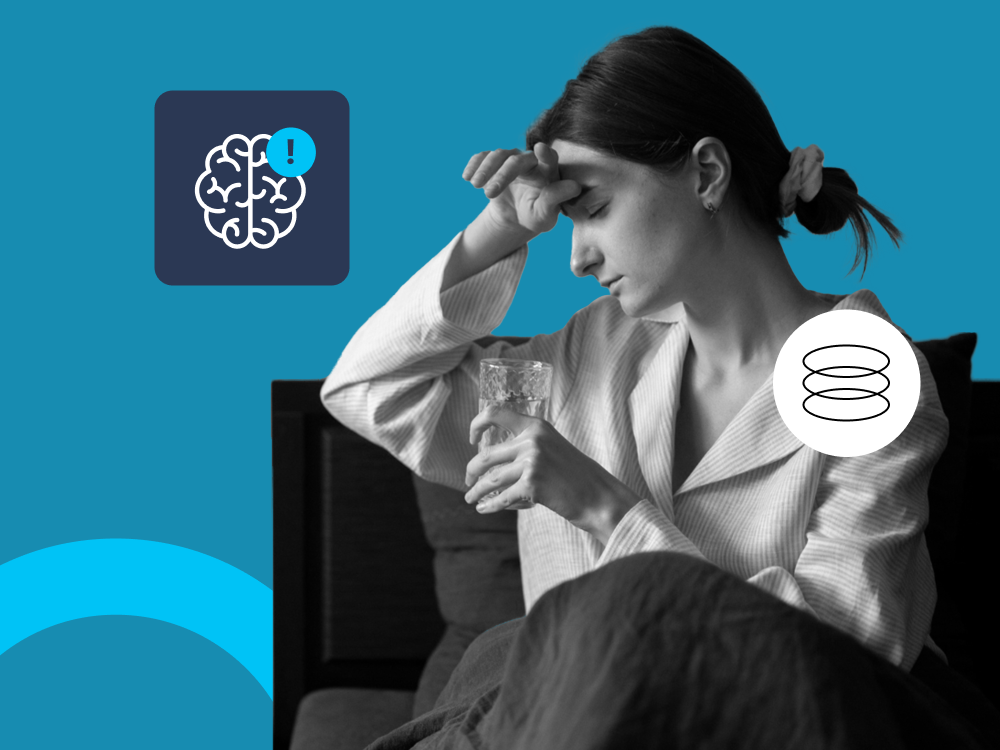
If your patients have ever asked, “Why aren’t you supposed to sleep after a concussion?”, they’re not alone. The short answer: sleeping after a concussion is safe once a healthcare provider has assessed the patient and cleared them to rest. The caution exists because sleeping immediately after an impact can delay concussion assessment and mask a more serious injury.
Generally, concussion specialists, sports neurologists, and other medical experts may suggest that patients avoid sleep directly after a concussion, and this may be a source of confusion. Research indicates that good sleep in both quality and quantity can help with concussion recovery, especially in the first week of injury post-concussion. It's important to clarify the relationship between sleep and concussion to better inform patients.
A concussion patient needs professional medical assessment as soon as possible, and sleeping after a head impact can interfere with concussion diagnosis if it delays medical attention. When a concussion diagnosis is delayed, the patient may experience persistent symptoms and may be more vulnerable to second impact syndrome, a second concussion sustained before the first has fully recovered.
This article covers what happens to the brain during sleep after a concussion, how concussions affect sleep in the weeks that follow, and when to seek medical attention immediately. We also discuss how digitized cognitive function tests can help speed up the concussion detection process, helping clinicians improve patient experience.
Article Highlights
Sleeping after a concussion is safe once a healthcare provider has assessed the patient. The risk is not sleep itself, it is delaying medical attention.
- Approximately 30% to 80% of concussion patients experience sleep disturbances including sleep apnea, hypersomnia, and insomnia.
- Concussions tend not to appear through brain imaging, which is why detection relies on cognitive and symptom-based assessment.
- Common concussion symptoms tend to last about 10 to 14 days. Symptoms persisting for months may indicate post-concussion syndrome.
What happens if you sleep with a concussion?
It is safe to sleep after a concussion after receiving medical attention and getting instructions from a healthcare provider to do so. It may even be a valid method of concussion treatment and recovery. But when it comes to sleeping during the acute stage versus the recovery stage, research shows that effects can be both negative and positive.
Why can't you sleep with a concussion right away?
While sleep is considered an important part of the concussion recovery process, going to sleep immediately after a concussion may have repercussions. While no concussion is exactly the same, there is a possibility that patients may experience one or all of the following:
- Delayed treatment and masked injuries: Sleep can play an integral part in concussion recovery, but immediately sleeping after an impact, without seeking medical attention, can mask the presence of more serious conditions (like a brain bleed or a skull fracture). Additionally, when opting to sleep right after a concussion delays medical attention, it can lead to a delayed diagnosis and treatment.
- Sleep disruptions: Approximately 30% to 80% of concussion patients experience a range of sleep disturbances, including sleep apnea, hypersomnia, and insomnia.
Additionally, patients may have trouble sleeping as sleep disruptions can occur as a symptom of concussion. Sleep problems like insomnia and hypersomnia may disrupt normal sleep patterns.
Is sleep good for concussion recovery?
On the other hand, sleep after a patient has been diagnosed and given treatment can have possible benefits, particularly during the concussion recovery process:
- White matter restoration: Research suggests that good sleep can have a restorative effect on white matter integrity, which may lead to improved concussion recovery times.
- Allowing the brain to rest: Generally, concussion recovery requires patients to limit their activities and avoid overstimulation, which can mean getting plenty of rest or sleep.
What happens to your brain after a concussion?
A concussion occurs when a patient experiences a head injury, neck injury, or physical impact that causes the brain to move inside the skull, leading to a mild traumatic brain injury. This sudden movement can cause brain damage on the microscopic level. This is why concussions are difficult to detect with magnetic resonance imaging (MRI) or computerized tomography (CT) scans; they don't tend to appear through brain imaging.
What makes detecting and diagnosing concussion so challenging is the heterogeneity of impacts. Since every impact affects each individual patient's brain differently, every concussion is a unique case. For example, some patients may experience hypersomnia and daytime sleepiness, while others may have trouble falling asleep and have insomnia symptoms.
The heterogeneity of concussions is why it's so important that patients receive immediate medical attention after an impact. Head injury patients can benefit greatly from personalized treatment options and patient-centered care, making reaching an accurate and quick diagnosis is so important.
How do concussions affect sleep?
A concussion patient may experience sleep disruptions or disorders connected to their mild traumatic brain injury before or during sleep. These conditions vary, but generally can lead to excessive daytime sleepiness, difficulty falling or staying asleep, and an erratic sleep schedule. They include:
- Insomnia: Difficulty falling asleep or staying asleep.
- Hypersomnia: Excessive sleep as well as sleepiness throughout the day.
- Sleep apnea: A respiratory disorder that interrupts sleep.
- Narcolepsy: A neurological disorder that makes it difficult to stay awake.
Other concussion symptoms
Outside of sleep disruption, a concussion can give rise to a variety of other symptoms. Look for symptoms like:
- Headache, nausea, and vomiting
- A sensitivity to light and noise
- Confusion or disorientation
- Feelings of anxiety or depression
- Trouble paying attention or concentrating
- Impaired inhibitory or impulse control
For a more detailed examination of the signs and symptoms of traumatic brain injury, see our article on diagnosing concussion.
What should you do after a concussion?
Having clear next steps for what to do after a concussion is not only helpful for physicians but for patients and caregivers, too. After all, there might not always be a medical professional nearby. While every concussion is different, the U.S. Centers for Disease Control and Prevention recommends that clinicians and patients generally follow this set of steps after a head injury:
- Seek medical attention immediately after the impact, ideally from a healthcare professional trained in concussion evaluation. This is vital for ruling out more serious head injuries that can lead to brain swelling or bleeding.
- Limit activities in the first few days. Some patients may find that limiting their activities and resting helps with recovery. Relaxing activities like reading or short walks can be attempted, depending on the severity of the patient's symptoms.
- Light exercise can be attempted once symptoms start to lessen and a patient's condition has improved. Physical activity can help patients ease back into their regular lifestyle, and there may even be a positive relationship between exercise and brain health.
- Resume activities when symptoms are gone or nearly gone. Depending on the severity of the initial impact, patients might be required to book a follow-up appointment with their physician before returning to work, school, or their usual daily activities.
Concussion danger signs
Concussions can have serious complications, and recognizing the dangers of a concussion is important. There's no single reason why a concussion becomes more complex; it may be due to the patient's medical history, and complications may arise due to improper recovery management or a delayed diagnosis.
Regardless of the underlying reason for increased condition severity, medical attention is required if:
- A patient's symptoms exacerbate over time instead of recovering. For example, a worsening headache, increased or continuing sleep disruptions, prolonged fatigue, and other concussive symptoms that keep persisting.
- They suffer a second concussion or multiple concussions before the first is fully recovered. This is known as second impact syndrome.
- The patient experiences severe concussion symptoms, like a seizure, memory loss, or a loss of consciousness.
It's vital for the patient to receive medical attention immediately if any of these signs appear. As an untreated concussion can lead to second impact syndrome, it's important for patients to get medical attention as soon as possible.
Post-concussion syndrome
Post-concussion syndrome (PCS) refers to the broad range of symptoms patients experience after a concussive impact. Common concussion symptoms like headache, fatigue, vision changes, balance issues, confusion, dizziness, insomnia, and difficulty concentrating tend to last for about 10 to 14 days. However, when a concussion patient experiences these symptoms for months, they may have PCS.
If left unaddressed, PCS can significantly affect a patient's quality of life. One way to measure and track PCS symptoms and recovery is through computerized cognitive testing. Online cognitive tasks can be used remotely to eliminate the stress of travel and are more time-effective than neuropsychological exams, making testing more convenient. Creyos also offers the Rivermead Post-Concussion Symptoms Questionnaire (RPQ) as a digital assessment of self-reported symptoms, which can help quantify their presence and severity.
Concussion diagnosis, tracking, and recovery
Traditionally, concussion detection has relied heavily on self-reported cognitive health tests using pen-and-paper. While useful, these evaluations require patients to attend appointments in person and can only capture subjective experiences, limiting their accuracy. Instead of solely relying on qualitative measures, studies show that implementing a variety of tests is the best way to evaluate for concussion.
Digital assessments, like Creyos, allow for more objective measurements and longitudinal data captured over a period of time, all while making the testing process more convenient for patients and physicians. The combination of behavioral health questionnaires for subjective self-reports and cognitive testing for objective measures has the potential to offer precise insights into a patient's overall cognition. It also supports baseline concussion testing and gives physicians more valuable data for making key medical decisions.
When it comes to concussion and sleep, Creyos offers the Pittsburgh Sleep Quality Index (PSQI). This cognitive test allows physicians to measure a patient's sleep quality, patterns, and disturbances over time. The PSQI can even distinguish between patients who have or haven't experienced a concussion, due to the effects on sleep quality. This distinction makes the PSQI a viable tool for gathering longitudinal data on sleep quality in concussed patients, leading to more informed medical decisions for concussion treatment and recovery.
The critical role of sleep and technology in concussion recovery
Essentially, what patients and physicians need to know about sleep and concussion is that while sleep can support concussion recovery, medical attention should always be the immediate priority. While some patients may choose to rest or sleep instead of travelling to the clinic after a concussion, most experts recommend seeking treatment as soon as possible to reduce the risk of further complications like second impact syndrome and PCS.
Concussion diagnosis no longer needs to be an inconvenient process. Instead of relying solely on inaccurate self-reports and hours-long neuropsychological exams, computerized cognitive tests like Creyos can be a viable part of concussion assessment. As technology continues to evolve, digital assessments are not only more efficient than traditional pen-and-paper methods but also provide more accurate data, which aids in better patient care and can lead to more informed healthcare decisions.

Reviewed by Mike Battista, Director of Science & Research at Creyos
Mike Battista specializes in brain health, cognition, and neuropsychological testing. He received his PhD in personality and measurement psychology at Western University in 2010 and has been doing fun and useful stuff in the intersection between science and technology ever since.