Skip to content
CASE STUDY

How Yukon Neurology Streamlined Cognitive Testing and Increased Completion to 99%

ORGANIZATION
Yukon Neurology
PATIENT POPULATION
Adults
CARE MODEL
Independent, single-physician practice
LOCATION
Oklahoma
FEATURED CLINICIAN
Melissa Picchione, RN
CREYOS CUSTOMER SINCE
2022
Clinician reviewing digital cognitive assessment results on an iPad
the challenge
6 hours

of neuropsychological testing elsewhere was often the only path to answers, a long workup that still left patients without results they could understand or act on.

the solution
2 hours

to complete a customized Creyos assessment at Yukon Neurology, after which patients leave with results they understand and a clear plan.

the results
99%

of patients now finish their cognitive assessment, up from 94%, with the practice completing about 10 neuropsychological evaluations a week.

"Patients see their results, they see the areas that relate to their life, and it validates it for them. That helps them explain what's happening to their loved ones"

— Melissa Picchione, RN
Yukon Neurology
THE COMPANY

An independent practice built around the patient relationship

Founded in 2018 by Dr. David McCoy, Yukon Neurology is a single-physician practice built to fill a gap: in the western Oklahoma City area, neurology meant a hospital system, not an independent clinic. Staying independent lets McCoy decide how he spends time with patients rather than being told how many to see in a day. "He does his best to spend as much time with patients as necessary, and give them as much information as possible," says Melissa Picchione, the practice's RN.

The practice treats a broad range of neurological conditions, but a large share of its patients, generally 60 and older, come in with memory loss concerns.
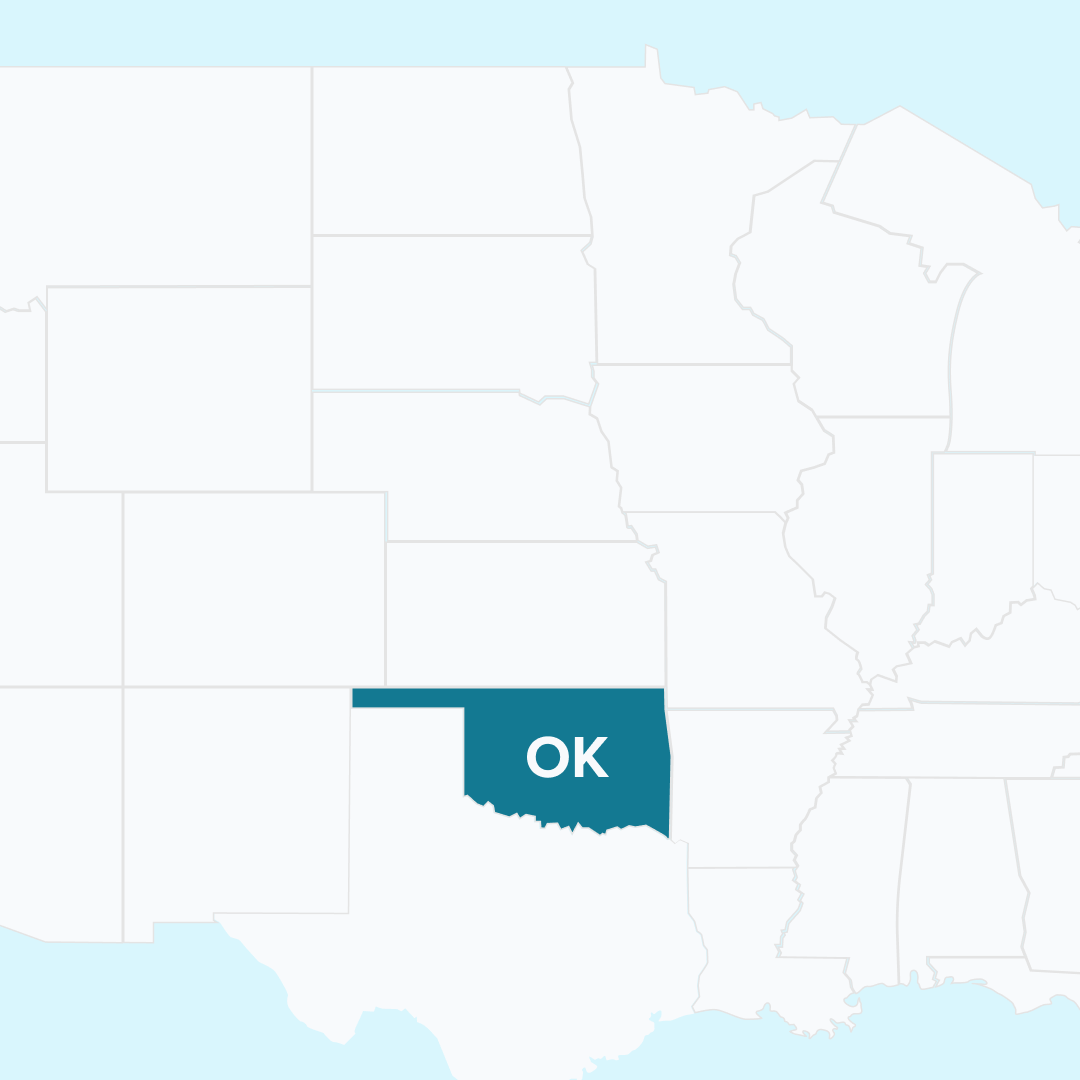
Yukon Neurology location, in Oklahoma
THE CHALLENGE

A cognitive test patients couldn't finish, and results they couldn't use

Yukon Neurology had been assessing patients with memory loss on another computer-based system. It produced data for physicians, but the user experience was poor. Older patients often found it hard to navigate, which hindered their scores and left some unable to finish at all. Before Creyos, completion sat at 94%, and every unfinished assessment meant a patient without answers and a repeat visit.

The results were no more usable than the test. As Melissa puts it, Dr. McCoy "felt disheartened that he wasn't able to relate the scores... to their everyday life," and patients left with "a lot of jargon that wasn't very clear from a patient standpoint."

Yukon Neurology even runs its own EEG studies so the team can read each patient's data first-hand, since "you can't share the brainwave studies between physicians," shares Melissa. Cognitive results the practice couldn't hand a patient plainly were a poor fit.

Underneath it all, patients with memory loss are often reluctant to be tested in the first place.

“A lot of people think that even investigating memory issues means they're going to go straight to a memory facility. Really, it's not like that.”

Melissa Picchione, RN
Yukon Neurology

Yukon Neurology needed a cognitive assessment patients could get through, and that produced something they could see, understand, and act on.

THE SOLUTION

An assessment built for patients, not just physicians

When Yukon Neurology set out to replace its previous system, it wanted a cognitive assessment that met 3 criteria:

  • Patients had to be able to complete it on their own;

  • The results had to be something those patients could understand, and;

  • It still had to give the practice the clinical detail it needed to guide treatment.

Creyos met all 3, and its effect was felt first in the experience of taking the test. The older patients who had struggled to navigate the previous system were able to work through Creyos with little assistance.

"Even patients who have anxiety during the test complete it much more easily than they did with our previous programs."

Melissa Picchione, RN
Yukon Neurology

After the test, rather than handing patients a printout of "jargon", the practice is now able to give them results they can interpret and relate to their own lives, which has changed the conversations that follow. "It's really easy to show somebody [their results]," Melissa explains, "and that allows the conversation to be opened."

For a practice built on giving patients information they can use, results like these were what had been missing, and the team's high expectations of Creyos were well met.

THE IMPLEMENTATION

It fit the workflow the practice already had

Adopting Creyos did not require Yukon Neurology to change how it works, and the practice starting administering it without reworking its clinical routine. "It fit right into our workflows, which was really nice," Melissa says. "We could just easily transition into it." If anything, the switch has saved the team time, since results land in the patient's chart and can be pulled up quickly to compare against earlier scores.

Reimbursement was just as smooth. Dr. McCoy handles the practice's coding and knows it well, so he set Creyos up himself, and Melissa remembers it as a seamless changeover. Several years on, Creyos is simply part of how the practice runs.
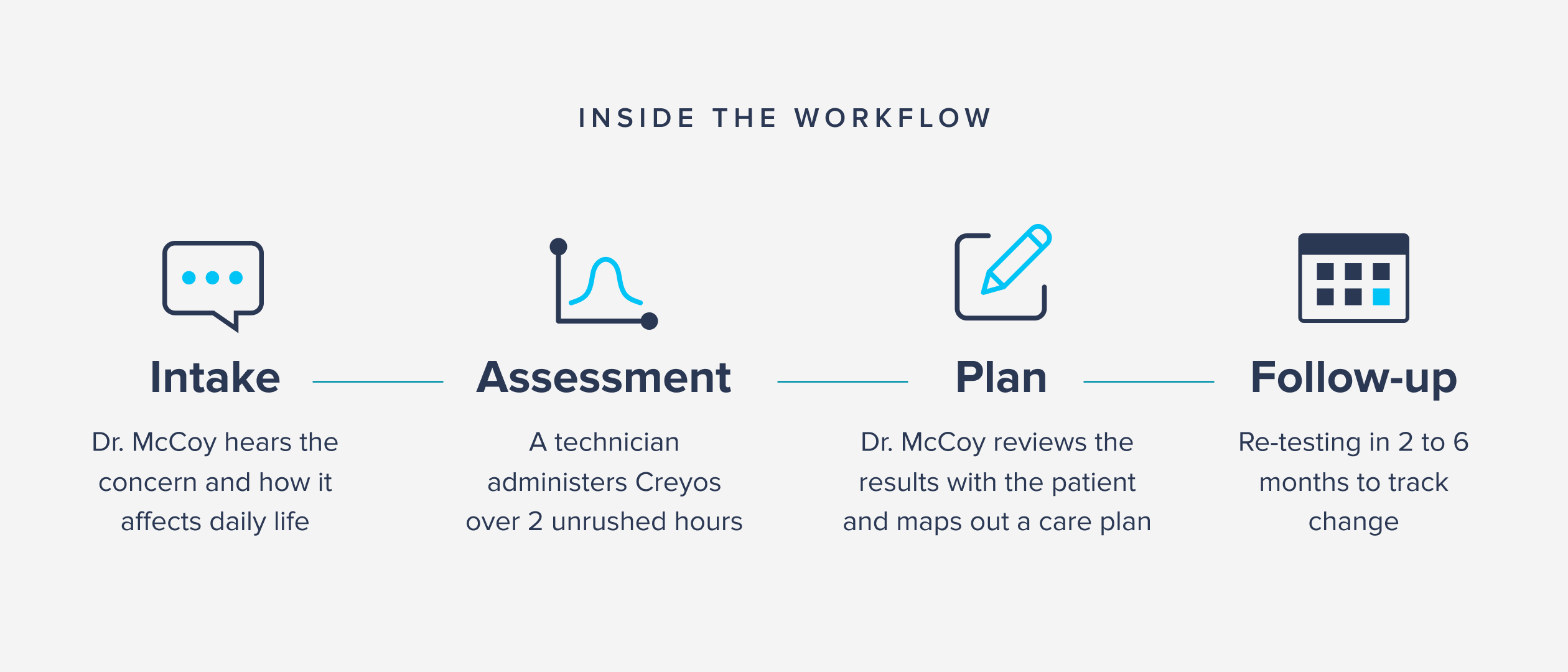

Diagram of Yukon Neurology's cognitive testing workflow, from intake to follow-up
THE RESULT

Assessments patients finish, and results they act on

The clearest change has been in how many patients finish. Where the previous system left some unable to complete their assessment, nearly every patient now gets through it. "Now we have probably 99% of people completing it, with a little bit of encouragement," Picchione says. The practice sees around 30 patients a day and completes about 10 neuropsychological evaluations each week.

Higher completion is only part of the story. Because patients can finally see what their results mean, they stay involved in their own care between visits, and that gives Dr. McCoy something concrete to track over time.

THE IMPACT

A fuller picture, and a growing practice

For Yukon Neurology, higher completion mattered less than what the results let the team weigh. A cognitive score on its own does not explain why a patient is struggling, and several common conditions can look like cognitive decline or deepen it. Because their Creyos protocol pairs the cognitive tasks with validated questionnaires for things like anxiety and depression, the care team can screen for those factors in the same sitting and consider, or rule out, whether one of them is contributing to what they see.

That has changed how patients relate to the practice. Some arrive at Yukon after a lengthy neuropsychological evaluation elsewhere, often a 6 hour session at a university. As Melissa describes it, those patients "get results, but it doesn't really address their concern." Because Yukon Neurology can offer a shorter assessment that ends in a clear plan, she has found that many of them stay, where before they might have drifted away in search of answers.

The same shift has begun to bring new patients in as well.

"We've had neurologists who don't offer neuropsychological testing refer to us, and psychiatrists refer patients to confirm whether there's a depression, attention deficit, or anxiety issue underlying it."

Melissa Picchione, RN
Yukon Neurology

Streamline cognitive testing in your practice

Talk to Our Team