
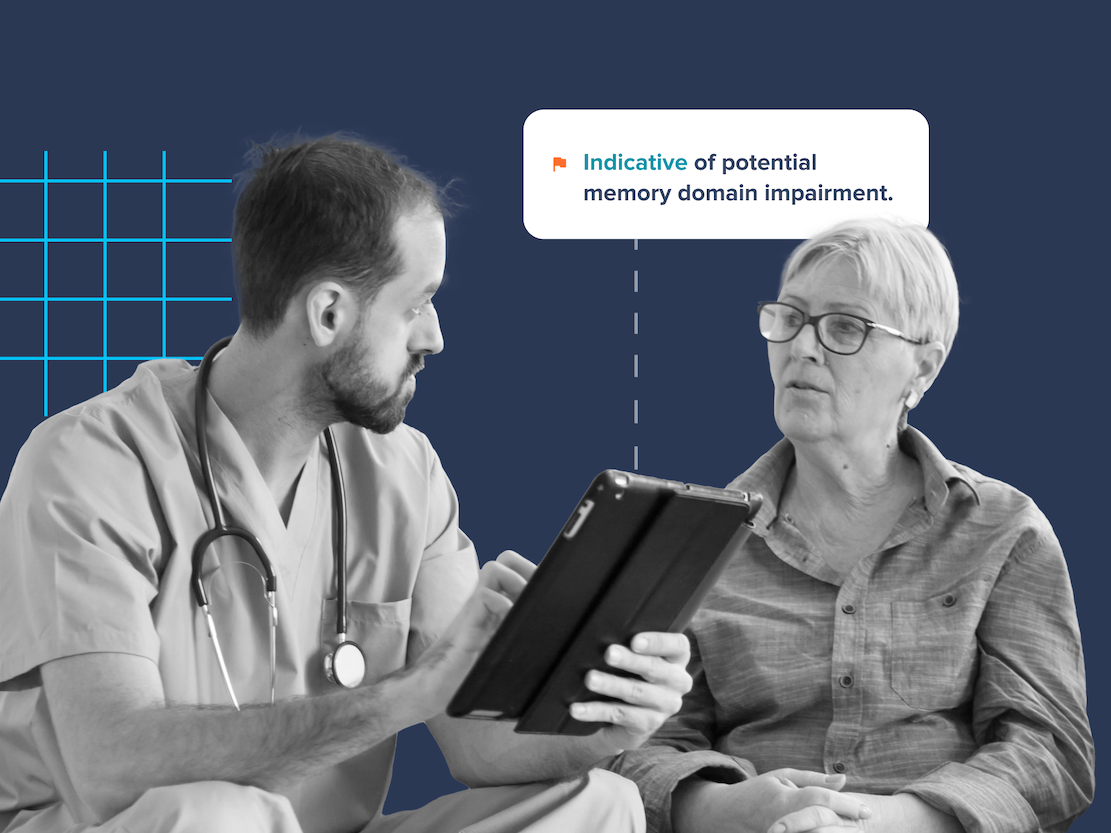
Neuropsychological testing is an in-depth assessment of brain function conducted when there are concerns about a patient’s cognition. Patients referred for neuropsychological evaluations face an average wait time of 5 to 10 months.
But is there more that can be done to assess these patients in other care settings, avoiding referrals? There is a significant gap between the comprehensiveness of short cognitive screeners and complete neuropsychological evaluations, but there are other screening tools available to fill this gap.
To improve patient outcomes and deliver care more efficiently and effectively, there’s a need for cognitive testing within the gap between standard screeners like the Montreal Cognitive Assessment (MoCA) or Mini-Mental State Examination (MMSE) and neuropsychological testing, which may take between four and six hours to administer, according to London Health Sciences Centre.
In this article, we cover the strengths and limitations of traditional neuropsychological assessment and how digital cognitive testing can fill the gap between short screeners and full tests for more efficient care.
Article Highlights
Neuropsychological testing is an in-depth assessment of brain function, but the real-world context surrounding it delays testing and, in turn, delays treatment.
- The average referral time for a neuropsychological test in the US can be 5 to 10 months for adults and 12 months or longer for children.
- Neuropsychological testing may take between four and six hours to administer, over one or more sessions.
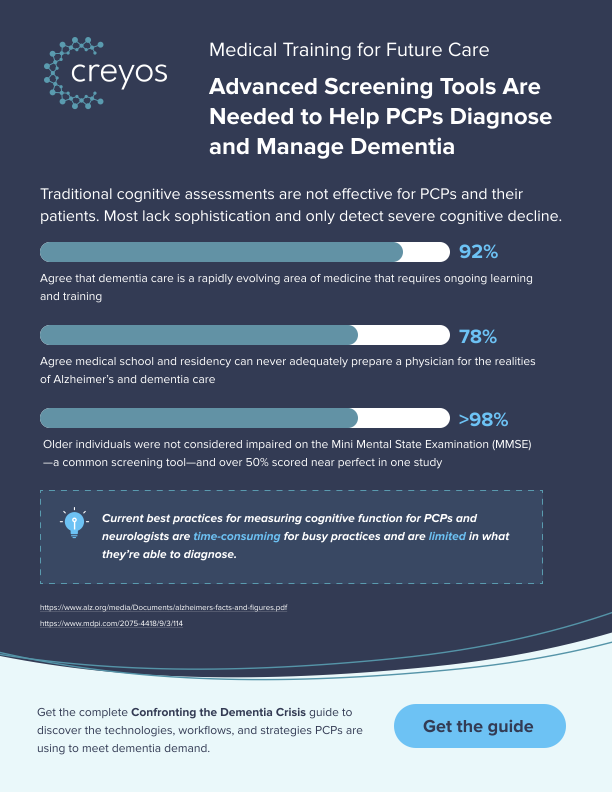
- Many traditional cognitive screeners, like the MMSE, MoCA, and SLUMS, tend to detect visible signs of cognitive decline rather than subtle deficits.
- Digital cognitive testing can fill the gap between short screeners and full tests, providing detailed information to help decide which patients truly require a longer neuropsychological examination.
How does neuropsychological testing differ from cognitive screening?
A cognitive function test is often administered as a preliminary screening tool before proceeding to a comprehensive neuropsychological assessment.
While both primary care physicians (PCPs) and neurologists can administer cognitive screeners, neuropsychological testing requires a referral to a neuropsychologist. This may lead to months-long referral wait times, disrupted continuity of care, and barriers to accessibility.
What conditions does neuropsychological testing assess?
Goals of a neuropsychological evaluation can include pinpointing the cause of a patient’s cognitive impairment and measuring the severity of known, brain-based conditions. Once the results are interpreted, the data can be used to support the diagnosis, treatment, and research of neurological and neurodevelopmental conditions.
Some conditions assessed by neuropsychologists include:
- Mild cognitive impairment (MCI) and dementia: Testing can assess core cognitive functions like memory, attention, language, and executive function to diagnose and monitor the progression of a patient’s cognitive decline.
- Traumatic brain injury: A neuropsychological test can measure the degree of cognitive impairment caused by brain damage, and the results can be used to assist in the patient’s rehabilitation planning.
- Stroke: An assessment can determine a stroke's impact on cognitive performance, particularly in the areas of attention, memory, language, and visuospatial abilities.
- Parkinson’s disease (PD): Neuropsychological batteries can be used to evaluate a patient’s brain function with tests that check for auditory processing, working memory, and overall processing speed.
- Multiple sclerosis (MS): Assessments help a neurologist identify the cognitive impairments caused by MS, focusing on measuring verbal and nonverbal skills, motor skills, concentration, memory, and problem-solving.
- Epilepsy: Neuropsychological evaluations can assess cognitive functions to optimize seizure management and patient quality of life.
- Attention deficit hyperactivity disorder (ADHD): Testing evaluates a patient’s attention, impulse control, and executive functions, aiding in diagnosis and treatment planning.
What are the limitations of neuropsychological assessments?
While a neuropsychological test is a reliable tool, the real-world context surrounding it delays testing, and in turn, delays treatment, leading to poorer patient outcomes. A faster, more accessible solution is needed to fill the gap and identify even subtle decline as soon as possible.
Gaps in screening
Patients are often referred for a neuropsychological evaluation after being identified as impaired on a cognitive screening test. The problem is that many traditional cognitive screeners like the MMSE, MoCA test, and Saint Louis University Mental Status (SLUMS) exam tend to detect visible signs of cognitive decline rather than subtle deficits.
Some clinicians aim to increase the sensitivity of the MoCA by setting a high cutoff of 26, with this nearly perfect score required to consider a patient as having normal cognitive performance. But the cutoff is debated, as it may lead to inflated false positives.
Long referral wait times
The average adult referral time for a neuropsychological test in the US can be 5 to 10 months, and wait times for children can be 12 months or longer, leading to underutilization of cognitive testing and poor patient outcomes. By that time, a case of MCI may advance to later stages.
Additionally, if their neuropsychological test is split across multiple sessions or requires in-depth interpretation, the patient may have to wait for follow-up appointments to determine whether their cognitive decline is consistent with a suspected etiology. This leads to additional time where their condition may deteriorate or otherwise change by the time they are in a position to receive treatment.
Length of testing
A complete neuropsychological evaluation can take between 6 to 8 hours over one or more sessions. Many patients who are referred for MCI testing are older adults who tend to have other health concerns, limited ability to travel, and a preference for being given choices about how and where they are tested.
Putting them through a multiple-hour test may impact stress levels and mood, potentially skewing the test and leading to inaccurate results.
Disrupted continuity of care
There’s a chance that a patient’s continuity of care may be disrupted because of a lack of support between appointments. Ideally, patients with cognitive concerns can complete cognitive testing and receive the diagnosis and treatment for their condition within the same clinic. But most clinics aren’t equipped to perform clinical interviews, screening, testing, and results interpretation.
Instead, the results are sent between multiple PCPs and specialists. As well, some PCPs may be unfamiliar with the details of neuropsychological tasks, requiring careful communication between clinicians for proper interpretation.
Disruptions like these may contribute to potential misdiagnoses, delayed or ineffective treatment, or poorer quality of life for the patient.

Lower patient completion rates
The wait time for a neuropsychological test can lead to lower patient completion rates, resulting in ineffective diagnosis and treatments. Because of the various barriers surrounding neuropsychological testing and the stigma of cognitive health care concerns, patients may be more resistant to follow through on neuropsychological appointments.
Reduced accessibility
Cultural variables can have an impact on the results of neuropsychological tests. Bias limits the accessibility of neuropsychological tests, as the evaluations may not be equally applicable to patients from different backgrounds.
Neuropsychologists consider these variables when interpreting results, but the effects of cultural factors are often underestimated, and fully eliminating bias requires advances in the tests themselves.
Whether or not cognitive tests are offered in multiple languages, at accessible reading levels, and with auditory and visual instructions can all affect a patient’s ability to complete a cognitive assessment.
These factors, especially when compounded, can create stress for the patients and lead to inaccurate results. Implementing tools that take steps towards a more patient-centered care approach can help reduce these barriers.
Comparing neuropsychological testing and Creyos
Neuropsychological testing is a useful tool for the accurate diagnosis and treatment of various neurological conditions, but it comes with a set of limitations.
To close the gap in neuropsychological testing, clinicians working with patients who have cognitive concerns may want to consider additional solutions, like Creyos digital cognitive assessments. These computerized assessments provide more detailed information than screeners, while also being much quicker to administer than neuropsychological tests.
The Creyos assessments bridge the gap between initial screening tests and neuropsychological evaluations, allowing clinicians to easily incorporate them into a more thorough testing process. Additionally, the results are easy to interpret, don’t require special training, and are instantly tabulated and compared to an 85,000+ person normative database for age-specific results and pinpoint precision.
The results of Creyos cognitive tasks provide domain-level information comparable to a full neuropsychological exam, and are scientifically validated:
- One study found that a 30-minute computerized assessment that included Creyos tasks was comparable to a 2-3 hour battery consisting of tasks common in neuropsychological testing.
- Another study demonstrated additional concurrent validity between automated Creyos testing and “gold standard” in-person neuropsychological assessments.
Creyos testing can be performed directly within a PCP, neurology, or neuropsychology clinic, providing detailed information to help decide which patients truly require a longer neuropsychological examination.
The Creyos dementia assessment and care plan
Creyos cognitive testing expedites screening, diagnosis, and monitoring, delivering accurate results and supporting patient care and quality of life. Each tool is scientifically backed and evidence-based, offers easy-to-interpret data, is fast to implement, and is conveniently accessible to patients and PCPs anywhere via an online platform.
Cognitive screening
The Creyos dementia screener is an accurate, two-task cognitive screener that takes less than five minutes to complete. This screener is capable of detecting subtle signs of MCI and dementia, and doesn’t require training to interpret. The screening results will indicate whether further assessment is recommended to aid in the potential diagnosis of dementia.
Cognitive testing
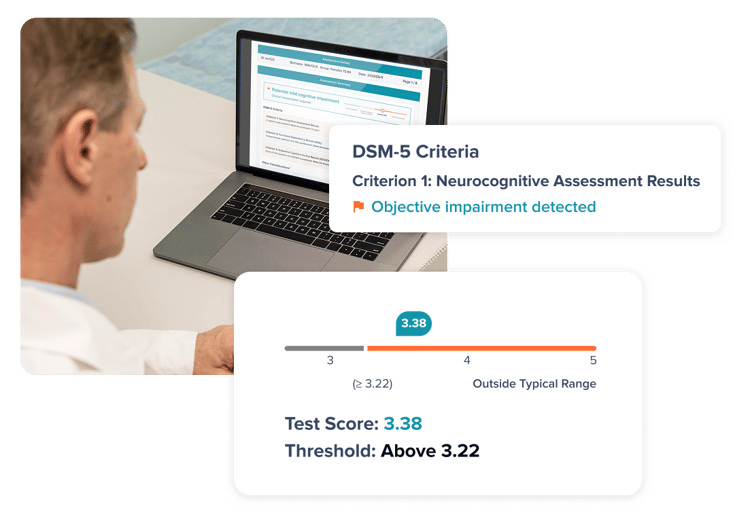
Creyos offers a 20-minute cognitive assessment that provides detailed information about cognitive markers that may be indicative of MCI or dementia, filling the gap between quick cognitive screening and a complete neuropsychological test.
The assessment is a detailed and scientifically validated six-task cognitive testing protocol, combined with questionnaires to measure activities of daily living, subjective cognitive concerns, and mental health symptoms.
Once complete, Creyos generates an easy-to-interpret report based on Diagnostic and Statistical Manual of Mental Disorders (DSM-5) criteria for neurocognitive disorders, allowing clinicians to gather and decipher patient data much faster than a multi-hour neuropsychological evaluation.
The test also includes instruments to identify mental health comorbidities, allowing clinicians to gather more comprehensive data about the patient and inform their decision on whether the patient needs additional neuropsychological evaluation.
Care planning
The Creyos dementia protocol has a built-in cognitive care plan. The care plan is based on guidelines by the Alzheimer’s Association, and allows PCPs to provide support for caregivers and enhance patient quality of life from the comfort of their own home. It can also be used in treatment monitoring to assess patient symptoms over time, so PCPs can collect longitudinal data and make objective clinical decisions.
Dr. McCoy at Yukon Neurology was able to reduce administration time for robust neuropsychological testing from 6 hours down to 2 hours. Learn more in this case study.
When to use Creyos
There are many ways to use Creyos to improve workflow and close the gap between screening and neuropsychological testing. For example, Creyos assessments can be used to identify mental health comorbidities, allowing PCPs to check the relationship between a patient’s cognition and mental health results before a full neuropsychological evaluation.
Neurology clinics can leverage the speed of the Creyos assessment to bring more cognitive testing in-house, minimize unnecessary referrals, and reduce the overall time of cognitive testing to less than an hour.
Advantages of Creyos
- Scientifically validated tests with objective results
- Remote or in-person administration
- No additional certification needed to administer
- Gamified, accessible, and approachable user experience for patients and clinicians
- Easy to interpret reports
- Electronic medical record (EMR) integration available
Compared to traditional neuropsychological testing, the computerized cognitive testing at Creyos is able to provide healthcare professionals with a fast and easy-to-interpret method of gathering objective data on a patient’s cognition, while also supporting continuity of care by storing vital information on a single, accessible healthcare platform.
Final thoughts: delivering robust cognitive care, efficiently
A neuropsychological exam can aid in determining the causes and consequences of dementia or MCI in a patient, but its limitations mean it’s not appropriate for every patient expressing concerns about cognition. Long referral wait times may leave older patients with chronic illnesses untreated for over half a year, and the added stress of an 8-hour test may end up affecting the results anyway, leading to more wait times for follow-up tests.
Instead of relying solely on neuropsychological testing to gather results, PCPs and neurologists can now overcome some of the limitations in neuropsychological testing with highly sensitive computerized assessments. With digital testing, clinicians can gather accurate, objective data on a patient and use that information to determine whether further neuropsychological testing is necessary.
By closing the gap, PCPs stand to save their patients time and deliver vital treatment and planning before cognitive impairments progress.

Reviewed by Mike Battista, Director of Science & Research at Creyos
Mike Battista specializes in brain health, cognition, and neuropsychological testing. He received his PhD in personality and measurement psychology at Western University in 2010 and has been doing fun and useful stuff in the intersection between science and technology ever since.