

The Sustained Attention to Response Task (SART) is a continuous performance task (CPT) that measures sustained attention, impulsivity, and response inhibition. The SART test captures a patient’s ability to mindfully process information in repetitive, boring, or distracting situations. This post explores the science behind the SART and how the Creyos ADHD Assessment integrates the task into screening that can be completed within 25 minutes.
Globally, about 8% of children and adolescents have attention deficit hyperactivity disorder (ADHD), according to a global umbrella review, but ADHD remains frequently misdiagnosed. Comorbid symptoms, stigma, and the time a comprehensive diagnostic process takes can leave patients without access to adequate treatment. With continuous performance tasks like the SART, providers can gather objective data on core ADHD symptoms.
Article Highlights
The Sustained Attention to Response Task (SART) is a continuous performance task that measures sustained attention and response inhibition, cognitive domains commonly affected in people with ADHD.
- The SART, designed by Ian Robertson and colleagues in 1997, asks patients to respond to every digit except the number three
- The Creyos ADHD Assessment scores the SART on four markers: commission errors, omission errors, reaction time variability, and slowing after errors
- The Creyos ADHD Assessment pairs the SART with four other cognitive tasks and age-appropriate questionnaires, and can be completed remotely or in person within 25 minutes
What is the SART test, and how does it work?
Ian Robertson and colleagues designed the SART to better measure sustained attention, as described in their 1997 Neuropsychologia study. The SART uses a go/no-go structure: patients respond on frequent go trials and withhold responses on rare no-go trials. The hypothesis was that this test would be less vulnerable than traditional vigilance CPTs to automatic responses, and after testing, it was found to indeed be sensitive enough to measure the ability to sustain attention during dull but demanding tasks.
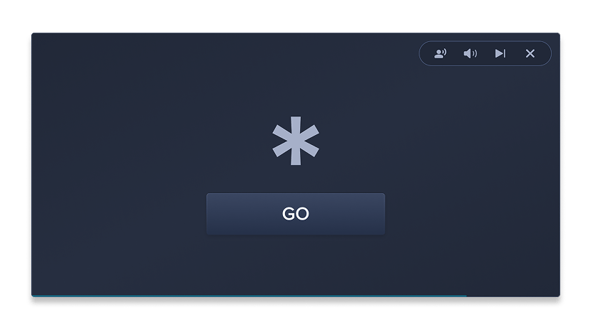
In the Creyos ADHD Assessment, the SART is simple to perform. A digit appears on the screen, and patients press the spacebar or the “Go” button for every digit except three, the no-go target.
How are SART results interpreted?
In the Creyos ADHD Assessment, SART performance produces four ADHD markers based on errors and reaction time during the task:
- Commission errors: These mistakes are counted when a patient presses “Go” on a no-go trial, when the number three appears. A high frequency of commission errors has been shown to be associated with ADHD symptoms in both children and adults.
- Omission errors: These mistakes are counted when a patient does not press “Go” on a go trial, any digit other than three. These errors may be associated with ADHD.
- Reaction time variability: Reaction time variability is an important outcome of SART performance that has demonstrated a strong link with attention deficit hyperactivity disorder. Gathering objective data about this aspect of attention from the SART can contribute to confident diagnoses.
- Slowing after errors: In studies comparing people with ADHD and control groups, most people without ADHD slow down after making a mistake in an attempt to be more careful. Children with ADHD, by contrast, sometimes fail to slow down or even speed up after making errors.
Benefits of the SART for ADHD assessment
While traditional self-report ADHD questionnaires offer insight into how patients subjectively experience their ADHD symptoms, they cannot gather objective cognitive data. Assessing specific cognitive markers of ADHD helps providers identify potential deficits in objective performance for more accurate diagnoses.
Even among digital cognitive tasks, the SART comes with particular benefits:
- Can be administered remotely or in person. Creyos tasks are flexible and accessible to patients either at home or in clinic.
- Minimal impact of factors like age, gender, or education, ensuring consistent comparisons across diverse groups of patients.
- Doesn’t require special technology and can be administered on in-clinic tablets and computers or a patient’s personal device, providing flexible options for patient comfort and provider ease of use.
Because the SART is included in the Creyos ADHD Assessment, scores are automatically integrated with the results of other Creyos cognitive tasks and age-matched behavioral health questionnaires. These come together in a single, comprehensive report that provides a full look at how a patient performed compared to the typical range for each ADHD marker.
How is the Creyos ADHD Assessment administered?
As an ADHD assessment tool, the Creyos ADHD Assessment gathers objective performance-driven cognitive data regarding markers associated with ADHD. It can be administered either remotely or in person and completed within 25 minutes. Easy-to-read reports are instantly generated and can be automatically integrated into patients’ electronic health records (EHR), so everything is in one place.
The Creyos ADHD Assessment includes the SART, four additional cognitive tasks, and age-appropriate questionnaires for accurate assessment of childhood and adult ADHD symptoms.
Cognitive tasks and questionnaires in the Creyos ADHD Assessment
Over 100 peer-reviewed studies were analyzed to identify 10 cognitive markers of ADHD, and four Creyos tasks assess these markers:
- Spatial Planning: Tests overall planning ability associated with executive function.
- Token Search: Assesses working memory, particularly working spatial memory.
- Feature Match: Evaluates short-term attention and impulsivity.
- Double Trouble: Assesses response inhibition and selective attention.
The analysis also identified the need for a measure of sustained attention. The SART adds four more cognitive markers that demonstrate strong associations with ADHD.
Three scientifically backed, age-appropriate questionnaires are also included in the Creyos ADHD Assessment:
- Vanderbilt ADHD Diagnostic Rating Scale (VADRS): A 55-question questionnaire designed to assess ADHD in children ages 6-11. The VADRS also assesses symptoms of oppositional defiant disorder (ODD) and conduct disorder (CD).
- Strengths and Weaknesses of ADHD Symptoms and Normal Behavior Scale (SWAN): An 18-item question list for patients ages 12-17, with 9 questions regarding inattention and 9 regarding hyperactivity and impulsivity.
- The Adult ADHD Self-Report Scale (ASRS v1.1): A questionnaire for patients age 18+ that asks about the six symptoms most predictive of adult ADHD, based on diagnostic criteria from the Diagnostic and Statistical Manual (DSM).
These subjective screening tools offer real-world insight into how patients are affected by their ADHD symptoms. While they provide essential context about symptoms, often questionnaires alone are subject to bias or do not provide enough information and can contribute to overdiagnosis when not accompanied by additional data that help form a comprehensive understanding of a patient’s condition. By working with Creyos, Telapsychiatry was able to reduce ADHD overdiagnosis by 30%, allowing them to steer patients in the right direction regardless of their diagnosis.
.png?width=2400&height=1256&name=Dr.%20Ozan%20Case%20Study%20-%20Quote%201%20(1).png)
For more detail on the science behind our ADHD assessment tools, take a look at the Creyos ADHD Clinical Report Science Guide.
Measuring sustained attention and response inhibition in ADHD
For people with ADHD, limitations in attentional abilities, executive function, hyperactivity, and impulse control can make school, employment, and relationships a struggle.
With tools like the SART, providers can rapidly assess core ADHD symptoms and the extent of their impact, providing a clearer view of a patient’s condition and getting them on the road to proper treatment faster.
Want to take some of the uncertainty out of ADHD screening? Reach out to us to learn more about integrating the Creyos ADHD Assessment into your clinical practice.


Reviewed by Mike Battista, Director of Science & Research at Creyos
Mike Battista specializes in brain health, cognition, and neuropsychological testing. He received his PhD in personality and measurement psychology at Western University in 2010 and has been doing fun and useful stuff in the intersection between science and technology ever since.