Skip to content

Match Risk-Adjusted Payments to True Patient Complexity

Dementia drives high costs when left unmanaged—leading to almost 50% more hospitalizations1, increased readmissions, and escalating clinical complexity.

Better screening helps you detect impairment that traditional testing may miss, reduce avoidable complications, and align risk-adjusted capitation payments to your patients’ care needs. See how underdetection is costing your organization.

Calculate the potential impact below.

Arrow

Additional Dementia Cases Detected info The number of newly dementia cases identified through improved screening and documentation, above your current baseline.

0

Potential Payment Benchmark Increase info Potential annual financial uplift driven by benchmark increases based on improved dementia identification across the patient panel, using average capitation rates.

$0

How It's Calculated

See how improved screening can impact your benchmarks

Explore how Creyos increases dementia detection rates, increases PMPM benchmarks, and helps to reduce downstream costs.  

Get a Demo

A Costly Cognitive Crisis

Traditional approaches to dementia screening often fall short, leading to delayed detection, undocumented cases, and higher burden across care teams and systems.

Up to 50% missed cases

Dementia is often underdetected and underdiagnosed in primary care, leading to unrecognized, unmanaged, and uncoded conditions.2

81% higher
costs

People living with dementia have 81% higher annual healthcare costs due to increased medical utilization, care needs, and complications.3

Escalated care complexity

Undiagnosed dementia drives preventable emergency visits and complex care needs—many of which earlier detection can avoid.4

CMS V28 Puts Dementia Detection at the Center of Value-Based Care

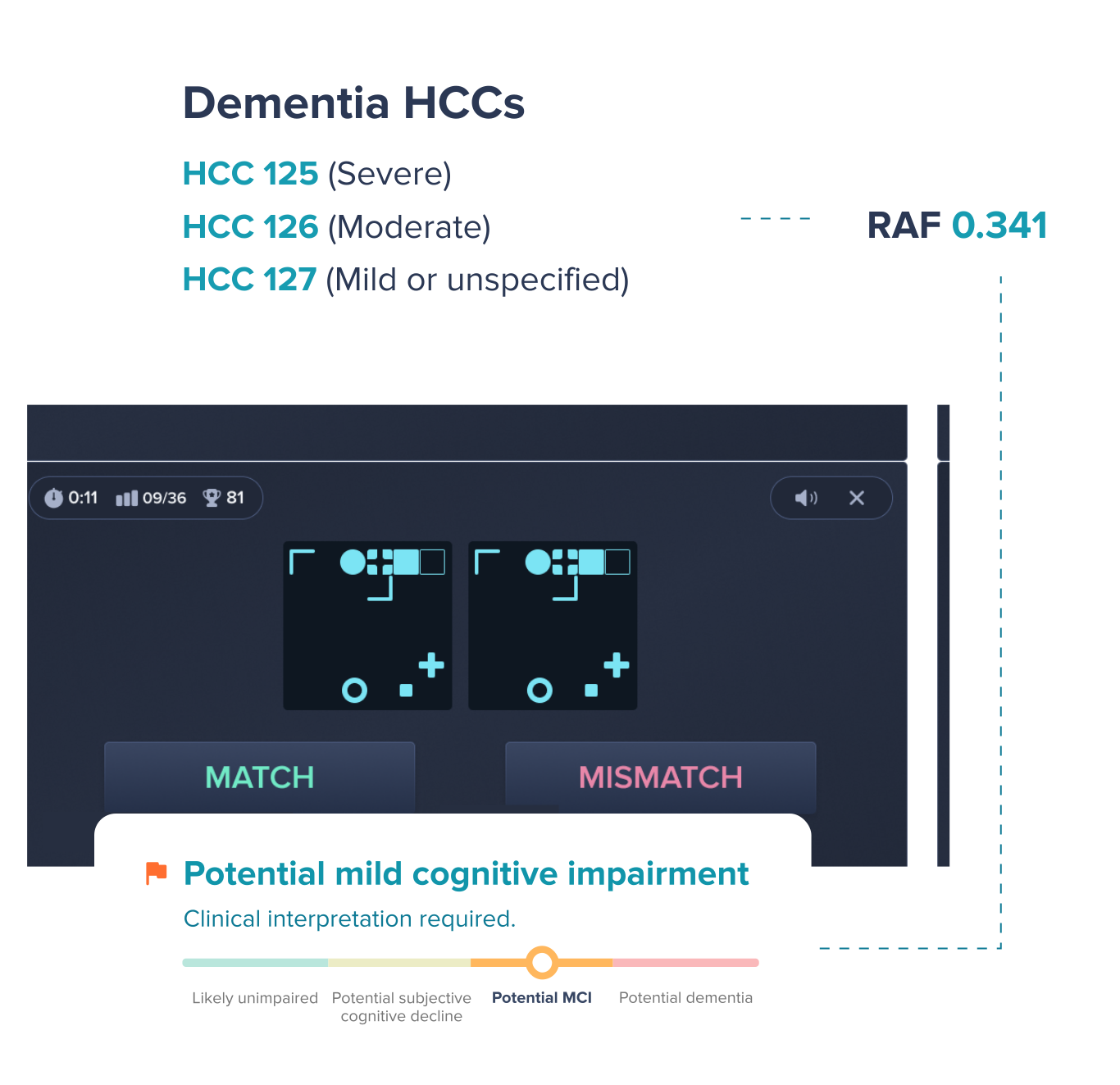
Balancing quality care with financial stability is challenging for any value-based care organization, intensified by the transition to V28 and evolving codes and risk values. CMS is placing greater emphasis on dementia care in the V28 risk adjustment model, introducing more HCCs to capture varying levels of severity. Each dementia-related HCC now carries a RAF value of 0.341.

Creyos enables earlier, more accurate detection of cognitive decline, helping identify diagnoses that traditional methods often miss and aligning reimbursement with true patient complexity.

Dementia HCCs

Maximize V28 Performance With Better Dementia Detection

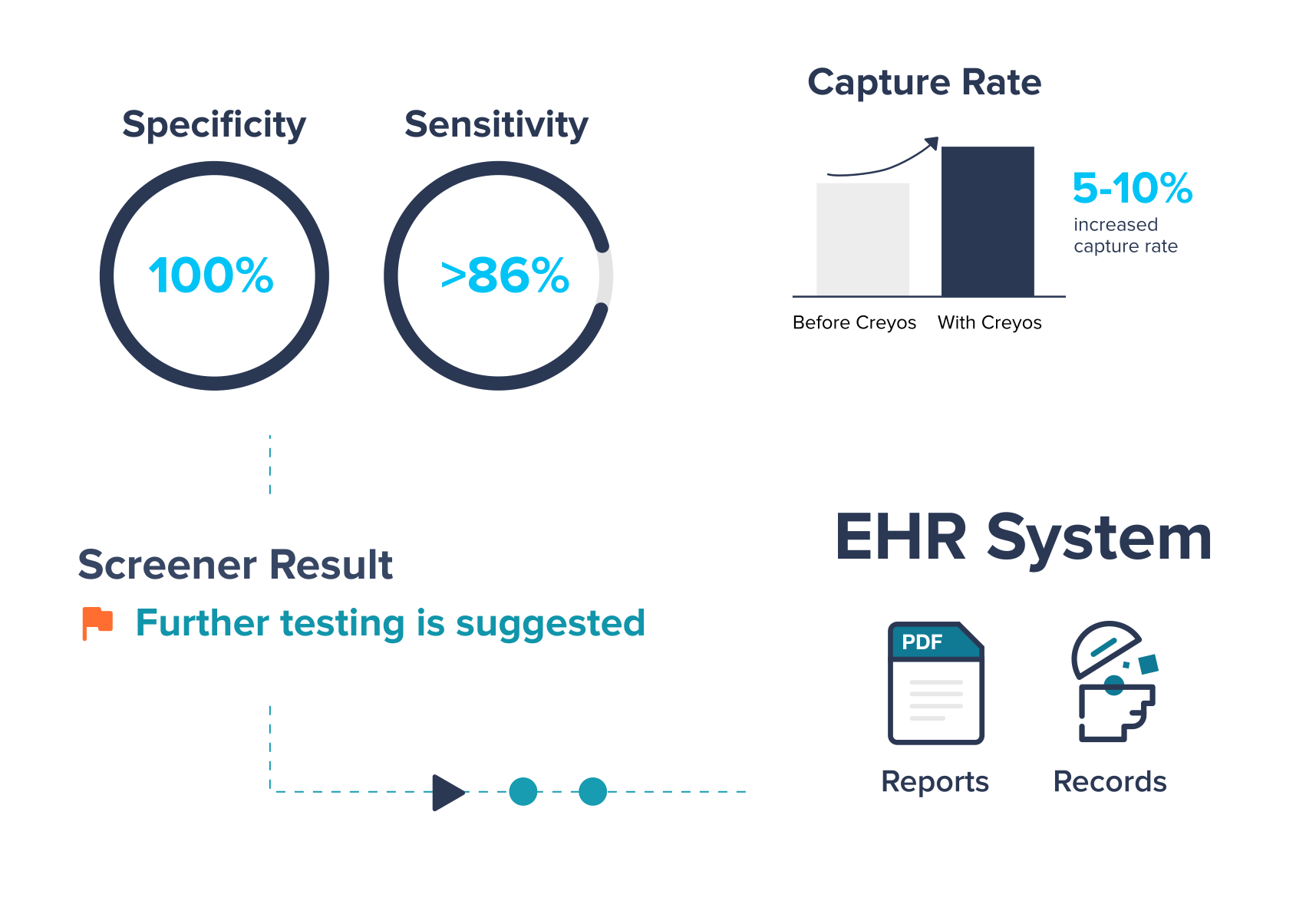
The Creyos dementia screener catches more dementia with a 5-minute, digitized assessment.

  • Highly sensitive & specific: Go beyond traditional screeners to reliably identify more cases.
  • Scalable workflow: Consistent administration that fits in your workflow and integrates with your EHR.
  • Point-of-care guidance: Next steps to identify, document, and act on flagged impairment.
Maximize V28-2

Uncover hidden risk with better dementia detection

Identify dementia sooner, prevent costly downstream complications, and deliver proactive, patient-centered care.

Get a Demo


1. Shepherd, H., Livingston, G., Chan, J., & Sommerlad, A. (2019). Hospitalisation rates and predictors in people with dementia: a systematic review and meta-analysis. BMC medicine, 17(1), 130. https://doi.org/10.1186/s12916-019-1369-7

2. Lang, L., Clifford, A., Wei, L., et al. (2017). Prevalence and determinants of undetected dementia in the community: A systematic literature review and meta-analysis. BMJ Open, 7, e011146. https://doi.org/10.1136/bmjopen-2016-011146

3. Kelley, A. S., McGarry, K., Gorges, R., & Skinner, J. S. (2015). The burden of health care costs for patients with dementia in the last 5 years of life. Annals of internal medicine, 163(10), 729–736. https://doi.org/10.7326/M15-0381 

4. Amjad, H., et al. (2025). Hospitalization outcomes among older adults living undiagnosed or unaware of dementia. Alzheimer’s & Dementia (Amsterdam, Netherlands), 17(1), e70051. https://doi.org/10.1002/dad2.70051