
Creyos cognitive tasks offer objective measures of different areas of cognition. Creyos digital cognitive assessments work by administering a set of tasks that are scored based on performance and can be used to detect levels of cognitive impairment. Used alongside behavioral questionnaires, these tasks give clinicians a full picture of a patient's neuropsychological symptoms that are potentially related to various health conditions.
The Creyos digitized tasks gather this data in minutes and add objective, domain-specific information to cognitive assessment efficiently, without interrupting workflows or slowing down the assessment process. Creyos tasks also offer the option for retesting to gather objective longitudinal data in light of disease progression or treatment interventions.
Article Highlights
Creyos assessments quickly gather objective data with cognitive tasks that can be performed in a matter of minutes, either remotely or in person. The following cognitive domains are measured by Creyos cognitive tasks:
- Short-term memory: Number Ladder, Spatial Span, Paired Associates, Token Search.
- Reasoning: Odd One Out, Spatial Planning, Rotations, Polygons.
- Concentration: Double Trouble, Feature Match.
- Verbal ability: Digit Span, Grammatical Reasoning.
Here’s a deeper look into the cognitive tasks that can be used within the Creyos platform to test for potential cognitive impairment and how they assess key cognitive domains.
Which cognitive tasks measure short-term memory?
Online cognitive assessments can help determine when memory impairment is related to standard age-related cognitive decline or if it may be better explained by a dementia diagnosis or another health condition.
Number Ladder
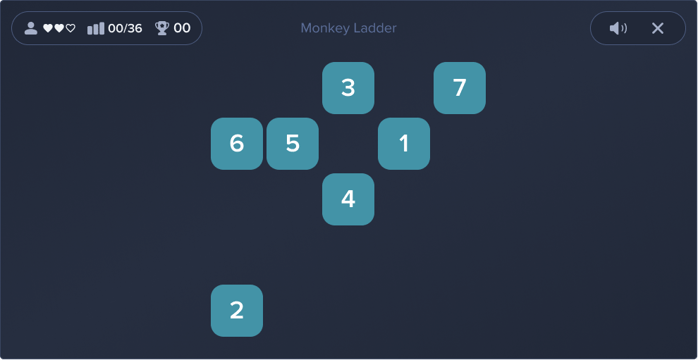
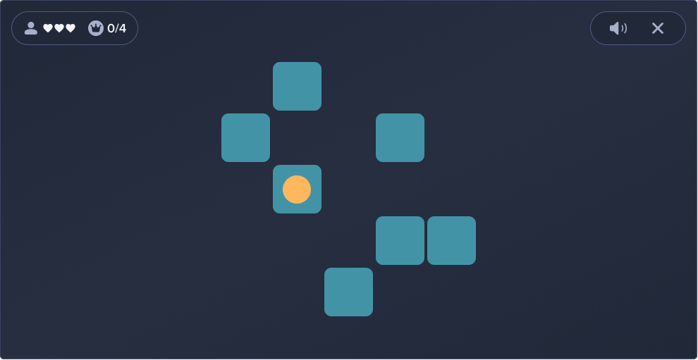
The Number Ladder task measures visuospatial working memory. This form of memory isn’t just about temporarily remembering spatial information but also knowing how to update it based on changing circumstances. A patient must understand a situation, plan a sequence of moves, and then execute them.
This is how patients perform the Creyos Number Ladder task:
- Boxes appear at different locations on the screen, each containing a number. The patient must remember which numbers appear in which box.
- The numbers disappear, and the patient clicks the boxes in numerical sequence.
- Difficulty is automatically adjusted based on the patient’s performance.
Judging depth and space is a significant part of visuospatial memory, which is often impaired among adults with dementia. Research has demonstrated that up to 80% of patients with dementia fall annually.
Spatial Span
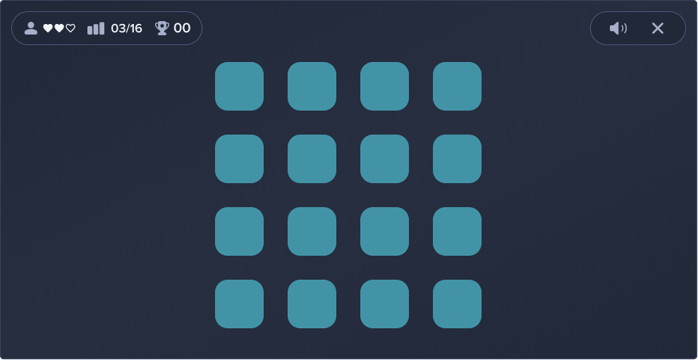
The Spatial Span task measures spatial short-term memory, including the ability to remember the relationships between objects in space. This task is a variant of the Corsi Block Tapping Task and assesses nonverbal memory deficits, which can be useful for getting insight into patients’ short-term memory without relying on verbal ability.
This is how patients perform the Creyos Spatial Span task:
- A grid of boxes appears on the screen and begins flashing in sequence.
- The patient must pay attention and click the box in the same sequence.
- If they are correct, an additional box will be added to the next sequence.
Impaired spatial memory can significantly impact patients’ ability to drive and follow directions, and people with Alzheimer’s disease were found to have twice as many accidents or near accidents on the road. Identifying early signs of impairment can help clinicians work with families to coordinate alternate means of transportation.
Paired Associates
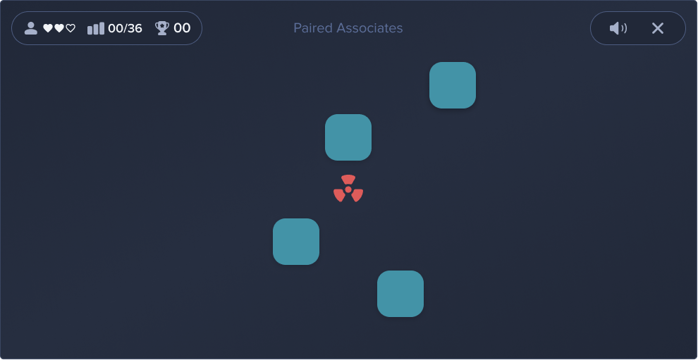
The Paired Associates task measures a patient’s episodic memory, which is the ability to remember specific events and pair them with their context. Patients must remember what objects they’ve seen as well as the location they were seen in.
This is how patients perform the Creyos Paired Associates task:
- A set of boxes appears on the screen and opens, one after the other, to reveal objects inside.
- The patient must remember which object appeared in which box.
- One at a time, the objects appear in the center of the screen. Patients must identify which box each object was located in.
- The number of boxes increases with correct answers.
Challenges with episodic memory are often associated with losing objects or belongings. However, it can also impact patients’ ability to pair words and their meanings. The Paired Associates task gathers data about a patient’s episodic memory ability, providing practitioners with objective insight that might help to explain patient-reported symptoms.
Token Search
The Token Search task measures a patient’s working memory, which is the ability to temporarily hold and work with new information. This task also involves self-directed searching, which introduces a strategy component to the test.
This is how patients perform the Creyos Token Search task:
- Several boxes appear on the screen, which the patient must click through to search for a token.
- When a token is found, the process repeats. However, the previous box where the token was found cannot be searched again.
- Correctly finding a token in every box will present a new puzzle with more boxes.
A decline in working memory can be impacted by age; however, more advanced impairment may be characteristic of certain health conditions. For example, a patient with dementia and impaired working memory might find themselves looking repeatedly in the same place over and over for lost keys, forgetting whether they had searched there previously.
Reasoning tasks
Challenges with reasoning can impact patients’ ability to plan, comprehend cause and effect, and make safe choices in their environment. These tasks measure the extent of these challenges, as well as the specific cognitive domains that are causing symptoms to manifest.
Odd One Out
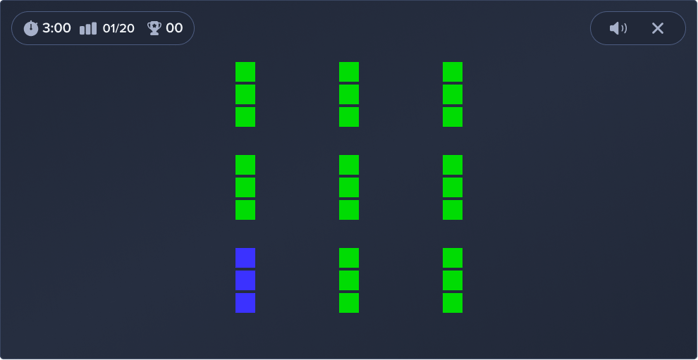
The Odd One Out task measures a patient’s deductive reasoning, which is the ability to form conclusions based on the information presented. When a patient can identify that “one of these things is not like the other,” they are using deductive reasoning skills.
This is how patients perform the Creyos Odd One Out task:
- Nine sets of shapes appear on the screen, different from each other in color, shape, and number.
- The patient must point out the shape that is most different from the rest.
- With every correct answer, the tasks get more difficult, and harder puzzles require comparing multiple features at once.
Impairments to deductive reasoning can be an early sign of Alzheimer's disease and mild cognitive impairment (MCI).
Spatial Planning
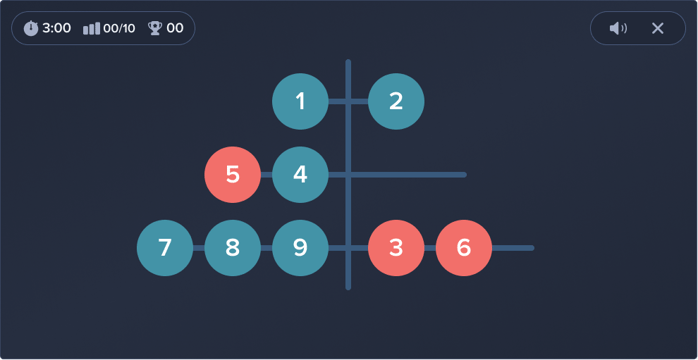
The Spatial Planning task measures a patient’s planning skills and ability to meet specific goals. It is a modern, digital update to the Tower of London and Tower of Hanoi test, which has been used since the 1970s to assess planning ability with physical pegs and beads.
This is how patients perform the Creyos Spatial Planning task:
- A tree-shaped frame appears on the screen with 9 numbered balls slotted onto the branches.
- The patient must rearrange the balls so they slot onto the branches in numerical order, in as few moves as possible.
- Puzzles get more difficult as the patient gets correct answers.
The cognitive functions required to successfully complete the Spatial Planning task relate closely to real-world activities of daily living (ADLs) and instrumental activities of daily living (IADLs) like making grocery lists, doing laundry, or managing finances.
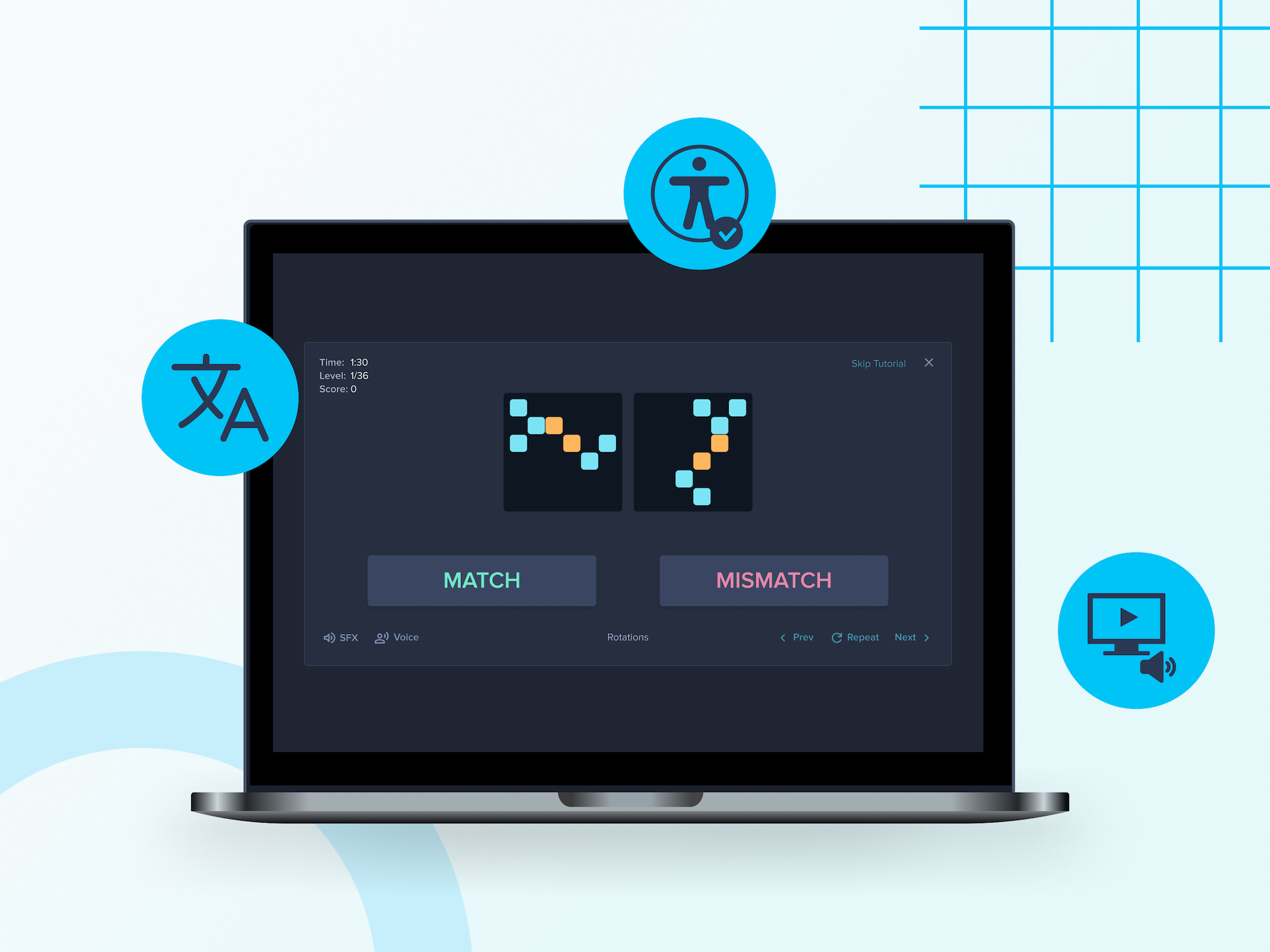
Rotations
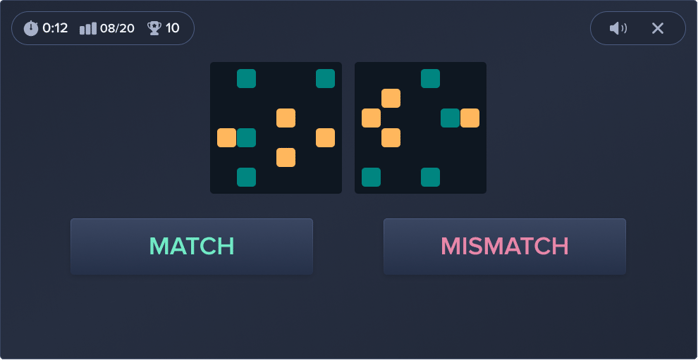
The Rotations task measures how well a patient can visually represent objects in their mind. Strong mental representation indicates that patients can accurately recognize objects and their correct organization or place.
This is how patients perform the Creyos Rotations task:
- Two large boxes appear on the screen, each filled with squares.
- The patient must determine if the boxes would be identical if one of them was rotated.
- Each time the patient answers correctly, more squares are added to raise the difficulty.
People with dementia may frequently get lost or wander when they cannot find their way home, which can be related to impaired spatial visualization and other cognitive functions. Creyos tasks flag this impairment and allow families to implement safety measures that might help to mitigate associated risks.
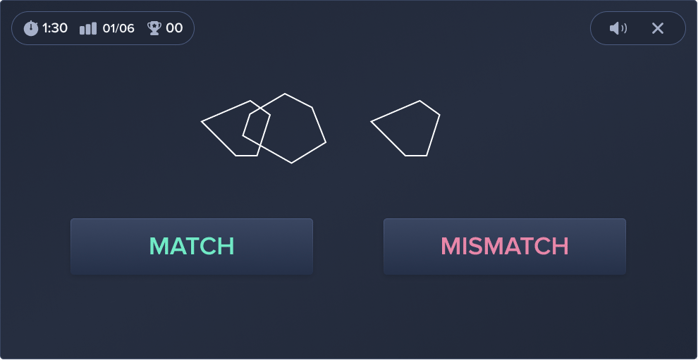
Polygons
The Polygons task measures a patient’s visuospatial processing, which is their ability to understand visual information and the relationships between objects. This applies to skills like reading maps, tying shoes, or moving safely through crowds.
This is how patients perform the Creyos Polygons task:
- Two panels appear, one of which contains two overlapping shapes, and the other just one shape.
- The patient must determine if the single shape is identical to one of the overlapping shapes or if it is subtly different.
- With every correct answer, the puzzles get more difficult.
Concentration tasks
Struggles with concentration and maintaining focus are a common early sign of dementia, among several other conditions like attention-deficit/hyperactivity disorder (ADHD) or sleep disorders. For example, if a patient is newly beginning to “zone out” during conversations or has grown frustrated with books after decades of being an avid reader, it could be beneficial to screen for cognitive impairment.
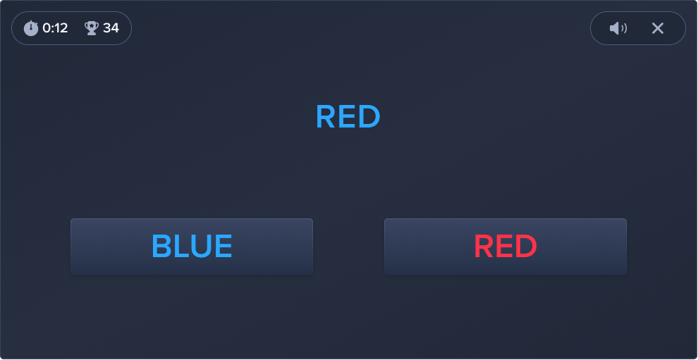
Double Trouble
Based on the Stroop task, the Double Trouble task measures a patient’s response inhibition: the ability to concentrate on information and appropriately respond, even when distractions are present.
This is how patients perform the Creyos Double Trouble task:
- Three colored words appear on the screen: one at the top and two at the bottom.
- The patient must click the word at the bottom that correctly describes the color of the ink the word is written in at the top. For example, the word at the top may say “blue,” but it could be written in red ink, creating a mismatch between written and visual stimuli that requires concentrated effort to respond appropriately.
Struggling with background conversations is one example of impaired response inhibition, but it can have more sinister implications as well. Many seniors are victims of scams because of distracting or urgent language that intentionally misleads them from indicators of fraud. Screening for cognitive impairment, and specifically assessing response inhibition, can identify at-risk patients and help their families put protections in place.
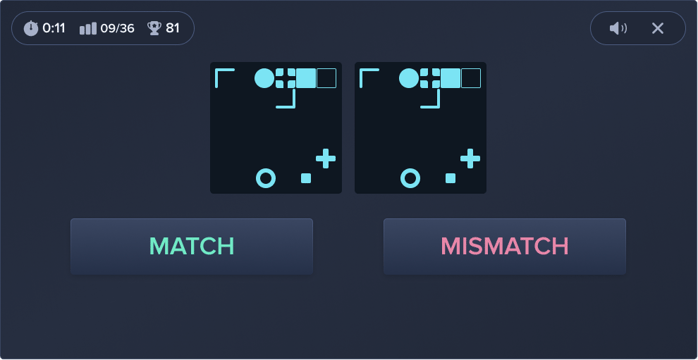
Feature Match
The Feature Match task measures a patient’s attention and perception skills. Identifying similarities and differences is essential for activities like cooking, holding conversations, and getting dressed appropriately.
This is how patients perform the Creyos Feature Match task:
- Two boxes appear on the screen; inside of each is an array of abstract shapes.
- The patient must determine if the boxes are identical or different.
- Difficulty adjusts based on the patient’s performance to keep the task consistently challenging.
Verbal ability tasks
Struggles with and the eventual loss of verbal communication are common symptoms of dementia that can be devastating to patients and family. Screening for declining verbal ability with digital cognitive tasks allows this impairment to be caught early, so clinicians can create patient-centered care plans before the disease progresses further.
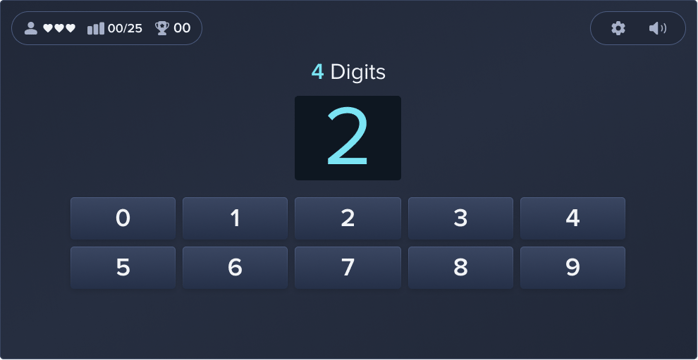
Digit Span
The Digit Span task measures a patient’s verbal short-term memory and is a variant of the verbal working memory component of the Wechsler Adult Intelligence Scale-Revised (WAIS-R), an intelligence test. Performance on this test is related to everyday tasks like remembering a phone number or understanding long sentences.
Difficulties with these tasks are often a self-reported early sign of cognitive impairment, and formal objective assessment of verbal short-term memory can help determine potential causes of impairment.
This is how patients perform the Creyos Digit Span task:
- One by one, a sequence of numbers appears on the screen.
- At the sound of the beep, the patients must click the numbers in the same order.
- The number of digits presented in the sequence increases with every correct answer.
In cases of mild cognitive impairment (MCI) or early Alzheimer’s disease, short-term memory is typically affected before long-term memory. Sensitive cognitive testing enables early detection, which leads to better health outcomes.
Grammatical Reasoning
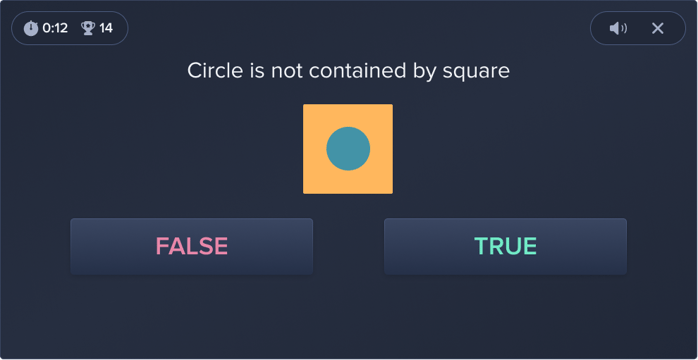
The Grammatical Reasoning task measures a patient’s verbal reasoning skills, which include the ability to quickly comprehend complex concepts that are expressed in words. Linguistically negative statements like “I didn’t realize this wasn’t their anniversary” can be especially challenging to understand.
This is how patients perform the Creyos Grammatical Reasoning task:
- A statement appears at the top of the screen with two objects underneath.
- The patient must determine if the statement about the objects’ relationship is true or false. For example: “The circle is bigger than the square.”
- Patients are scored based on how quickly and accurately they respond.
Verbal reasoning is essential for managing conversations. Not only does this skill impact social relationships, but it can also extend to and impact a patient’s ability to safely follow healthcare instructions.
Why should dementia screening be standard practice?
According to Alzheimer’s Disease International, over 55 million people were living with dementia worldwide as of 2020, and that number is expected to double every twenty years. By 2030, the projected incidence is 78 million people.
Integrating tools for assessing dementia into clinical practice can help practitioners prepare early for the evolving cognitive health landscape. The Creyos Dementia Assessment and Care Plan offers an effective digital solution for assessing cognitive decline quickly and accurately. Not only will that make your clinic more competitive, but it will also help you get ahead on providing high-quality care to vulnerable patients.


Reviewed by Mike Battista, Director of Science & Research at Creyos
Mike Battista specializes in brain health, cognition, and neuropsychological testing. He received his PhD in personality and measurement psychology at Western University in 2010 and has been doing fun and useful stuff in the intersection between science and technology ever since.